Affirmation, Blessings, Dying to Self, Faithful Living, New Year, Uncategorized, virtue, Winter

A Voice in the Wilderness: “Prepare!”

Ah, the end of another year! I always enjoy looking ahead to a new year. For me, there is a certain pleasure to be found in getting things ready and in order. We do it every time we pack for a paddle or camping trip, make and shop for a week’s worth of menus, or stock up on necessities (nothing worse than finding out the hard way that you’re out of toilet paper!).

How do we prepare for another year? Usually we don’t to be honest. We shuffle along without looking back or forward, content to use these last vacation days to eat, sleep, and play with loved ones. Still, there is precedent for preparing oneself, for understanding the lay of the land in our heart, mind, and soul. To do that well, we need to study history. In warfare, the best leaders know from history how to confuse the enemy. They know to send out a vanguard to spy out the situation. They draw up plans of attack.

In our own life, the way the past year transpired can be instructive for directing our future steps. The year’s end is a good time to do the hard work of review. I have lately been thinking about the virtues-beautiful concepts like love, honesty, courage, hope, steadfastness, kindness, chastity, charity, humility, temperance, prudence, justice, and diligence to name a few. I have been wrestling with the question: which virtues do I regularly display in my life, and which are weak?  If I wasn’t humble before, an honest survey like this will help develop humility, because there is much work to be done in the arenas of the heart, mind, and soul.

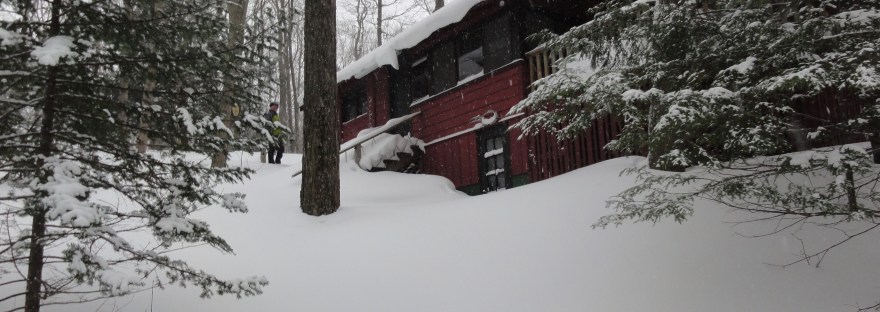
Our family cottage in the woods is not winterized, so it sits shuttered all winter, mantled with snow, empty of life except for the mice that squeeze in through the cracks. Each spring, someone takes on the task of making the place habitable. Opening the cottage is a yearly ritual of “getting ready”- airing out the dank, musty rooms, sweeping away dust and cobwebs, washing windows, baiting mousetraps, making beds, turning on the water, and setting wood in the fireplace for the first fire.

I think it’s a good analogy for what we should do at the New Year with our own insides.

Where have we been lazy? What needs airing, sweeping, washing?

How have we been treating others? How can we smooth our roughest edges to be more hospitable, more just, more charitable, more loving? How can we be wiser about finances? About the way we use our time for the greater good instead of our own numbing leisure? It all starts with the virtue of honesty. How honest are you willing to be about your own shortcomings? And, how willing are you to accept the responsibility for growth?

God has the future in hand. We look forward, yet are sometimes too fearful and protective about our lives. Yet Jesus and the angels’ most frequent reassurances were always, “do not be afraid.”

Can we be bold enough to believe God, and to understand that our own shortcomings and sins, when dealt with honestly, become a faith-filled path toward virtuous living? As the ball drops at midnight, listen for the voice of one calling in a wilderness to make way for God in your heart. Be honest with yourself, make plans, and you’ll be surprised what the New Year brings!

~J.A.P. Walton

adventure, Affirmation, Cancer, canoeing, Creation, Creator, Darkness, death, God, Henry David Thoreau, Hope, Lessons from the Wilderness, Life's Storms, Nature, Peace, Perseverence, Praise, Ralph Waldo Emerson, Religion, Silence, Transcendentalism, Uncategorized, wilderness, Wilderness Paddling

The Ecstasy in Being Brave

I have been reading about transcendent philosophy espoused by the likes of Emerson and Thoreau. Its main tenets are that man and (N)ature are inherently good, emphasizing the prime importance of the individual and individual freedom, as well as oneness with the universe. At its most basic, the idea teaches that there is a power deep inside of us that, when we tap it, allows us to become one with what we see, whether it’s a mountain, a constellation, a river, a sunset, a storm, or an animal.  It teaches that we have a light inside us that banishes darkness, leading us to know Truth, wisdom, and goodness. And, when all of this aligns within us, a deep delight, a visceral ecstasy-or transcendence-results.

As a student of the Bible, and the God who wrote it, it is disturbing to me that many of these transcendentalist ideas are woven into the weft and warp of the minds of people who seek out the wilderness. Why?  Because it gets everything horribly backwards.  I will let a simple chart do the talking:

Bible Transcendentalism
Sin is real, both in people and Nature All people and Nature are inherently good
God is light and Truth Each person is his own source of light & Truth
Worship of anything other than God is idolatry Nature and beauty should be worshiped
Knowing God brings delight Delight is a direct result of knowing myself
God is the only and the great, holy I AM I am God, my own deity and salvation

Still, to believe what the Bible says about all of this, you first have to believe in the reality of sin and evil in this world, and, more directly, in your own heart.

People who don’t know the God of the Bible don’t accept that we live in the tension between God’s goodness and the evil he has allowed.

They only want a loving God. They only want the light, the happiness, and the good things of God. But, for humans to have perfect freedom to choose how they live and what they believe, there has to be a choice. Life or death. Light or darkness.  Goodness or evil.  It is no wonder that these people cannot fathom how something so evil as the attack on the World Trade Center could happen in this day and age. People who know God, and understand that most of the world has chosen to reject him think, how could it not?

When Hugh got cancer we were all devastated. Sickness has a way of letting big questions scream at us. Why would God allow this suffering, especially for someone as good as Hugh? But our goodness is irrelevant –and irreverent- in the face of a holy, just, and good God. Sickness is just part of what it means to be human. So is death.  Mark and Hugh had been paddling together long before the leukemia showed up. They kept paddling during ten long years of treatments. Why?  What did the wilderness have to offer in dark and confusing times? It offered the chance to leave the distractions and torments behind: the doctor visits and hospital stays, the long, long road to an outcome that no one could predict, the fear, the hopeless feelings- all of it dropped out of sight the minute the two brothers stepped into their canoes.

We can go to Nature to be wowed. We can go to get away from the world’s brokenness. We can go to seek out the quiet places where God’s voice can be heard, where there are “moments when [we] can sense Him near [us], and [we] can never quite believe it.

He never condemns, He just sustains. He doesn’t judge, He understands. He gives [us] hope again, and says be brave.”[1]

The Walton brothers went out, not to find themselves, not to be their own light, not to become one with Nature, but to bathe in the balm of the unsullied wilderness, perfect in its minute and grand designs, just as God created it.

They went in brotherliness, to be bolstered with strength enough to be brave together in the dark shadow of Hugh’s illness.

They never went to attain ecstasy through oneness with a brilliant sunset. It was to know and treasure that they were one with the very God who made that sunset, knowing that they were loved, held and nurtured in spite of the specter of illness and death. If that’s not ecstasy, what is?

~J.A.P.Walton

[1]Bear Grylls.Facing the Frozen Ocean. Pan Books, UK.2013 (digital edition). p.105.

adventure, Affirmation, Blessings, Creation, death, Dying to Self, Faithful Living, God, Heaven, Home, Hope, Lessons from the Wilderness, Outfitting, Peace, Prayer, Serving Others, Uncategorized

Do You Have a Purple Notebook?

If you had an hour to think about where you are headed, and why, what would you write down on your “outfitting” list?

We’ve begun a slow transition from the bluff back to Trout Creek, and the tall grasses and migrating birds are telltale signs that summer is nearly over. Normally at this time of year, the Walton brothers are busily outfitting for their annual fall paddle in the northern latitudes, when the hallowed and dog-eared purple notebook comes out with its years of collective wisdom- list upon list of gear, menus, and groceries that must be gathered before departure.

The brothers deeply enjoy the process of getting everything ready. As I write this, I have just put Hugh on a plane for Arizona to join 3 of his brothers for their paddle trip down the Colorado River.  He was lamenting that taking a trip with professional outfitters takes away much of the pleasure that the “doing for yourself” brings.  He was missing his purple notebook.

It is interesting to study the word outfit as a verb.  In wilderness jargon, it means to assemble the gear and necessities for an extended time away from civilization: water purification, camp stove, food, first aid kit, compass, tent, emergency distress signaling device, and the like. But it has made me think about whether or how we outfit for our everyday life. I tend to be a list maker, so it’s not a stretch to see how my adopted processes for daily tasks help me stay on course; a decades-old two-month menu cycle informs grocery shopping, and a bill-tracking database helps quickly settle accounts. Going to church every Sunday morning gives each week an anchor, adding stability and sanity into this busy life. Still, what do I DO on a regular basis to see to the proper “outfitting” of my life?  If I kept a small purple notebook of the necessities, what would it contain, and how would it keep me on a wise path? Do I enjoy the process of “getting ready” and what am I getting ready for?

When we were younger, this was easier to answer. We were saving money for a house down payment, for kids’ college, for retirement, and developing skills and talents that made us valuable in the workforce. We were learning our way through parenting, and, more recently, caring for our parents. We were studying Scripture and developing a deeper relationship with God and each other.

But what do I “outfit” for now, in retirement?  I am making new lists. They are less about preparing for the future as they are about understanding that the future is already here in the present. My own lament is in wondering how much “present” I missed all those years that were so focused on preparing for someday.  So, I find that the lists are evolving, much less focused on action and more focused on virtue.  Virtue? Yes. Character infused with godliness. It’s a high calling, and worth the study.

I believe in eternal life with God, which gives me a secure future that I didn’t fully appreciate in my younger years. A secured future gives us the freedom to take better care in and of the present.

My new set of lists is energized by prayer that God outfits me with grace, wisdom, contentment in any circumstance, and a truly benevolent heart for others.

Other things in my notebook (mine is blue) include to:

  • refrain from divisive speech
  • be the best listener in the room
  • honor my husband
  • cherish and dignify my mother’s final days
  • to appreciate creation in all its beauty and mystery
  • and to jump more readily with Isaiah’s enthusiastic response to God’s lament, “Whom shall I send? And who will go for us?”  And, Isaiah swiftly replied, “Here am I. Send me!” (Isa 6:8)

~J.A.P. Walton


Affirmation, Blessings, Creation, Creator, Darkness, Dying to Self, Faithful Living, Forest, God, Hate, Lessons from the Wilderness, Life's Storms, Nature, Peace, Praise, Prayer, Serving Others, Uncategorized, wilderness, wisdom

The H’s of Learning & Unlearning

I taught thousands of college students over the years.  The biggest challenge was not helping students learn; it was first getting them to unlearn the things wrongly buried in their psyche: that rote memorization rarely creates understanding; cramming is foolish; being in class is a critical necessity; classmates are not just co-learners, they are also your teachers; the internet is not always the best source of information; talking to people face to face is an important skill… believe me, there’s more!  But, the point is that

we have all learned things that we need the guts and determination to root out and unlearn before our growth as a whole, helpful, and happy person can develop and mature.

When we take the time (that in itself is an important learning skill) to seek out the grandeur and solitude of the wilderness, we become students of nature- wild and human. There is so much we can learn if we are also willing to unlearn the things that make us small, harried, worried, unhappy, and vexed (oh how my grandmother the writer loved that word!)

I believe that all of learning is rooted in love.

And what does the wilderness teach us out of love about love?  That this world was created by design, with an Artist’s eye and a passionate Hand. What we find in the wilderness is that the world, as created, is infused with a holiness that transcends all the things humans can do to ruin it.  The wilderness teaches us humility, and to affirm the good that we see and can be to others. It teaches us to love the Creator.

If love is the root from which all learning blossoms, then it follows that the things we’ve learned wrongly do not shoot forth from love. When I take the time to seek out the solitude and teaching that creation offers, I ask myself what I need to unlearn first-those things the world pushes me to think, say, or do that are not things to be proud of. First, I must unlearn haste. It’s one thing to hurry to get dinner on the table for a hungry tribe; it’s another to live each day as if God did not create enough time. The wilderness teaches me that I must slow down.

The world has taught us to hate. We distrust anyone who is not like us. We spill our hatred over onto social media.

We grind our axes and our teeth. Hate is the rot at the core of our discontent, and it cannot possibly grow out of a heart steeped in love.

If you find yourself impatiently fuming at (fill in the blank), you are not acting out of love.

We have also learned to hoard from this consuming and consumptive world. We make and we take and we guard it closely with our tightly balled up fists- our time, our money, our very selves.

The wilderness teaches us all this: that our haste, and our hate, and our hoarding are ugly and shameful, and utterly pathetic in the face of the humility and holiness we encounter in creation.

I don’t know about you but I have much to unlearn in order to learn rightly.

~J.A.P. Walton

Affirmation, Blessings, canoeing, Creation, Creator, Dying to Self, Faithful Living, Forest, God, Hope, Lake Michigan, Lessons from the Wilderness, Nature, Serving Others, Uncategorized, wisdom

Count On It

I am known in my family for my quirky penchant for counting things-the number of kayak strokes I take to my husband’s single dip of a canoe paddle (about 8), the mileage on a bike ride, the number of geese flying in V formation, how many feet of fishing line I let out when trolling, the number of steps in any flight of stairs, and a daily report of the number of cargo and cruise ships that pass by on the big lake.

During June at the bluff, the fervent counting begins. See the doe with two fawns, and raise your eyebrows in disbelief when the neighbor shows you a picture of the bobcat with five kits under her deck.  The robins are on their second brood already, and the dying ash trees that have summoned the voracious pileated woodpeckers means there are bugs galore just for the hammering. Today I saw a monarch butterfly, the first of the summer’s four generations that it will take to produce heirs with the will and stamina to fly to Mexico in September (one day two Septembers ago, I counted 75 monarchs/hour heading south along the bluff line). Each night, two baby screech owls silently glide in at dusk to hunt the plentiful moles and voles at the forest’s edge. And who could even begin to count the mayflies at hatch time?

I think I count things because it helps me be present and aware of my surroundings. Counting gives the world I see and hear a sense of order and rhythm, helping me apprehend patterns and hear Nature’s music.  Mostly I just love all things numbers.  Of course, much of the counting we do in life could be considered just so much idle wool-gathering; we tally our financial assets, count down the number of days until Christmas, check the number of likes on a social media post, and keep a running score in our head of who’s let us down.

But what should we be counting?  What (and who) can we count on? When Job tried to argue his feeble case, God let go with a thundering,

Who are you to lecture me? Where were you when I filled the storehouses with snow and hail? Do you even know how I measured out the dimensions of the universe? Can you count the lightning bolts?”

In other words, there are lots of things only God can count, like all the stars in all the universes, every fish in the sea, and the grains of sand on the coast. This is the same God who tenderly tells us that He knows the number of hairs on our head, and the very sum of the days of our life.

We can count on God to be our strength, hope, and peace when we feel like our own strength is gone. And, of course, when we live a life that has died to self, we can count on each other.

I love to watch the world go by while I keep count, and I am beginning to appreciate how to count it all joy when God gives me work to do, and the strength to do it. That’s what it really means to count your blessings.

~J.A.P. Walton

Photo Credit: ML Walton, Lake Charlevoix, June 2018.

Thanks for reading and sharing with your friends.