adventure, Affirmation, Cancer, canoeing, Creation, Creator, Darkness, death, God, Henry David Thoreau, Hope, Lessons from the Wilderness, Life's Storms, Nature, Peace, Perseverence, Praise, Ralph Waldo Emerson, Religion, Silence, Transcendentalism, Uncategorized, wilderness, Wilderness Paddling

The Ecstasy in Being Brave

I have been reading about transcendent philosophy espoused by the likes of Emerson and Thoreau. Its main tenets are that man and (N)ature are inherently good, emphasizing the prime importance of the individual and individual freedom, as well as oneness with the universe. At its most basic, the idea teaches that there is a power deep inside of us that, when we tap it, allows us to become one with what we see, whether it’s a mountain, a constellation, a river, a sunset, a storm, or an animal.  It teaches that we have a light inside us that banishes darkness, leading us to know Truth, wisdom, and goodness. And, when all of this aligns within us, a deep delight, a visceral ecstasy-or transcendence-results.

As a student of the Bible, and the God who wrote it, it is disturbing to me that many of these transcendentalist ideas are woven into the weft and warp of the minds of people who seek out the wilderness. Why?  Because it gets everything horribly backwards.  I will let a simple chart do the talking:

Bible Transcendentalism
Sin is real, both in people and Nature All people and Nature are inherently good
God is light and Truth Each person is his own source of light & Truth
Worship of anything other than God is idolatry Nature and beauty should be worshiped
Knowing God brings delight Delight is a direct result of knowing myself
God is the only and the great, holy I AM I am God, my own deity and salvation

Still, to believe what the Bible says about all of this, you first have to believe in the reality of sin and evil in this world, and, more directly, in your own heart.

People who don’t know the God of the Bible don’t accept that we live in the tension between God’s goodness and the evil he has allowed.

They only want a loving God. They only want the light, the happiness, and the good things of God. But, for humans to have perfect freedom to choose how they live and what they believe, there has to be a choice. Life or death. Light or darkness.  Goodness or evil.  It is no wonder that these people cannot fathom how something so evil as the attack on the World Trade Center could happen in this day and age. People who know God, and understand that most of the world has chosen to reject him think, how could it not?

When Hugh got cancer we were all devastated. Sickness has a way of letting big questions scream at us. Why would God allow this suffering, especially for someone as good as Hugh? But our goodness is irrelevant –and irreverent- in the face of a holy, just, and good God. Sickness is just part of what it means to be human. So is death.  Mark and Hugh had been paddling together long before the leukemia showed up. They kept paddling during ten long years of treatments. Why?  What did the wilderness have to offer in dark and confusing times? It offered the chance to leave the distractions and torments behind: the doctor visits and hospital stays, the long, long road to an outcome that no one could predict, the fear, the hopeless feelings- all of it dropped out of sight the minute the two brothers stepped into their canoes.

We can go to Nature to be wowed. We can go to get away from the world’s brokenness. We can go to seek out the quiet places where God’s voice can be heard, where there are “moments when [we] can sense Him near [us], and [we] can never quite believe it.

He never condemns, He just sustains. He doesn’t judge, He understands. He gives [us] hope again, and says be brave.”[1]

The Walton brothers went out, not to find themselves, not to be their own light, not to become one with Nature, but to bathe in the balm of the unsullied wilderness, perfect in its minute and grand designs, just as God created it.

They went in brotherliness, to be bolstered with strength enough to be brave together in the dark shadow of Hugh’s illness.

They never went to attain ecstasy through oneness with a brilliant sunset. It was to know and treasure that they were one with the very God who made that sunset, knowing that they were loved, held and nurtured in spite of the specter of illness and death. If that’s not ecstasy, what is?

~J.A.P.Walton

[1]Bear Grylls.Facing the Frozen Ocean. Pan Books, UK.2013 (digital edition). p.105.

adventure, Adventure Tourism, Cancer, Cancer treatments, canoeing, Dying to Self, Faithful Living, God, Lessons from the Wilderness, Life's Storms, Nature, Outdoor Adventures, Perseverence, Prayer, Religion, River, Serving Others, Uncategorized, wilderness, Wilderness Paddling

When God Floats Your Boat

Two years ago, the Walton brothers paddled in Ontario’s Spanish River Provincial Park. SRPP info   They chose a route that threaded through multiple lakes connected by short, shallow outlets. In low water, these outlets turn into tricky portages that leave the canoeist knee deep in boggy, rocky muck. It can quickly become a slog hauling canoes and supplies over challenging barriers that were supposed to be paddled but instead have to be portaged without any trails to follow. The brothers were dismayed to find when they arrived in September that the water levels were at their lowest in a long time, clogging their planned paddling route with clots of muck and rock where lakes should have been.

After Hugh underwent his second round of chemotherapy and subsequent bone marrow transplant, he developed blood clots called DVT, or deep vein thrombosis in one leg.  It is actually quite common for leukemia patients to acquire DVT.  DVT info  These clots are life-threatening because they can move through the blood and lodge in the lungs. Once in the lungs, the clots become barriers to oxygen exchange, and the patient can quickly die of suffocation. As a result, Hugh is now on blood thinners. While this is a terrific remedy for blood clots, it does raise the risk of a dangerous bleed-out from cuts or accidents. As a matter of fact, on one trip, Hugh was pulling a canoe up onto a sandy beach in his bare feet when he stepped on a buried and severed tree root that stabbed deep into his instep. It took some time for the bleeding to stop, and the brothers were too far into the wilderness for immediate help. They now have a rule that you can’t ever be barefoot on trips unless in your sleeping bag.

There are barriers in life that quickly and easily clot our thinking. I often find that they are spiritual in nature, and usually begin innocuously when we let our focus become too heavily inward. Our inner dialogue evolves into a diatribe. We’ve been wronged, treated unfairly or with disrespect, and the “I” language in our head bubbles over in frustration and anger. These are times to take great care, because the lifeblood of the Holy Spirit is clogged, and our sour thinking then deprives us of the spiritual oxygen to act and live rightly toward God and others. Days become a slog of carrying heavy burdens that weigh us down in the muck of our darkened thoughts.

There is a spiritual blood thinner though, and it is incongruously connected with the blood of Christ.

If you can intentionally move your thoughts from yourself to God, if you are willing to unyoke yourself from life’s burdens, to think of and serve others first, God will float you up out of the muck. It’s a wonderful experience to feel the waters of the Spirit float you up, out, and on your way. Next time your language is laced with “I’s”, get in the boat with God and get moving again.

~J.A.P. Walton


adventure, Campfires, Camping, Cancer, canoeing, Creation, Darkness, death, Faithful Living, God, Henry David Thoreau, Hope, Lessons from the Wilderness, Outdoor Adventures, Starry Skies, Uncategorized, wilderness, Wilderness Paddling, wisdom

The Brothers Gemini

The two Walton brothers have spent over thirty years paddling the rivers and lakes of the far north each autumn because of their shared love of wilderness, canoeing, and one another. They paddled as young men in the vibrant prime of their lives, and still do today as seasoned and much older men. Not even Hugh’s cancer could stop these adventuring brothers, who know more than most that both the wilderness and brotherly affection have healing hands. Hugh stayed positive throughout the ten long years of treatments, too busy living to entertain thoughts of dying. And in his deliberate living and adventuring, he taught his brother Mark about peace and hope.

It often happens that the sicker man is the nurse to the sounder.”[1]

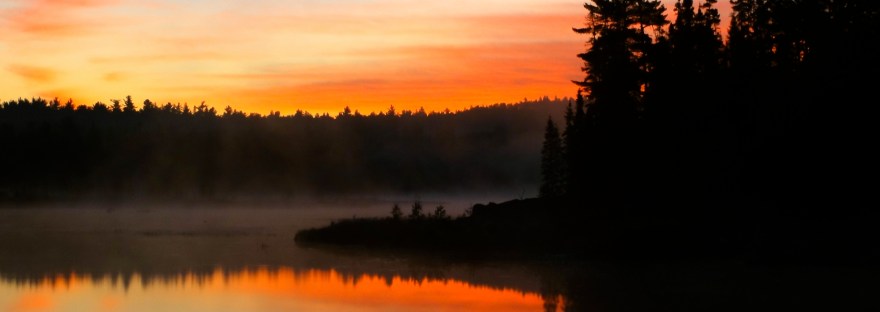
A favorite time of day in the northern latitudes is the autumnal twilight when the sun has gone down early and it’s too cool for bugs. An earlier sunset means the brothers can sit around the campfire for a few hours before turning in. The washing up is done, the canoes are put to bed, and the bear bag has been secured high in a tree. Such evenings are steeped in the reflections of the lowering sun as it briefly teases the landscape and water into a blush, while the spruces’ silhouettes go from stark outline to murky drab until darkness cradles them into its bosom entirely. Eventually, the young fire that started up with spits and mutters matures into a sedate, radiating murmur of glowing and hypnotizing embers. The waters warble a sultry lullaby. A loon mournfully trills across the water. The night in the wilderness is never completely silent, rather orchestrated with a subtle harmony, and it becomes clear, with careful listening, that the small voice of God is out here in this deep indigo twilight. Slow evenings are a necessary part of the adventure, for it is at night that the body is restored. The same can be said for one’s soul.

It is easy, when far away from the nonstop noises and lights of our lifestyles, to look intently at every natural thing out in the wilds and feel thankful that the planet still has these unadulterated oases of space, timelessness, stillness, color, and open skies. This is flair. Art. It is creation, imagination, beauty and adornment. This is how God made the world, speaking it out word by word, adding extravagant flashes of color, texture, and music in the everyday life of the wilds. We miss seeing it and hearing it, and we misunderstand its importance in our daily lives. Fire, water, and the waking creatures of the night all make for a mesmerizing symphony, a bewitching tonic for what ails us.

The brothers aren’t big talkers at night; still they enjoy each other’s company in a curiously uncommunicative way, on a shared adventure among best friends at the end of a physically challenging day. And though the fire and melody draw them in, they stay up late-on clear nights at least-because of the stars. This is especially true when camped beside a remote lake, where trees and rocky ledges can’t obscure the sky. The starry lights emerge one by one as the darkness encroaches. And, aside from the fire, the darkness in the wilderness is complete, no rival light pollution out here. Venus, Jupiter, and the Big Dipper materialize. And though Orion won’t show up until November, they know he’s on his way, the able guardian of the night and comforting friend to those who pray through the night watches in winter. The dancers of the Pleiades begin their warm up. Somewhere out there in the low autumnal sky the sleepy moon pokes its head out from under the covers. Like Orion, felt but not yet visible in the northern hemisphere, the brothers Gemini stand tall, side by side, arms raised in triumph and praise. I like to imagine that the Walton fellows are the Gemini twins, arms around each other’s waists, holding their paddles aloft in victorious self-congratulation and a joy that cancer could not squelch.

~J.A.P. Walton

[1] Henry David Thoreau. A Week on the Concord and Merrimack Rivers, Viking Press, 1985. p. 31 (The author originally published this book in 1849, detailing an 1839 river trip with his beloved brother John, who died in 1842.) Read it here: A Week…Thoreau

Cancer, Creation, Darkness, death, Faithful Living, God, Hope, John Muir, Lessons from the Wilderness, Life's Storms, Prayer, River, Sierra Nevada, Spring, Trees, Uncategorized, wilderness, wisdom

The Geese, the Floods, and John Muir

Geese flew over the house this morning, with a honking so hauntingly welcome that it stopped me breathless with the happy assurance that winter is losing its grip. This has truly been a winter of discontent, to borrow from John Steinbeck (my favorite author of fiction). We lost a loved one. Another continues to decline. We are sending up prayers for too much cancer, too many bullets, the sword-rattling of our enemies, and the deaths of two great men of prayer and faith, R.C. Sproul and Billy Graham. This week we had days and days of rain atop melting snow, sending our creeks and rivers out of their banks.

To dwell on all this too long leaves us as drab and lifeless as the snow-matted flood-stained grass. We defend ourselves with intentional numbness. Yet the geese remind us that goodness abounds, that life is not snuffed out entirely, and that there is work to be done. This week, as Trout Creek rose higher and faster, swelling and bullying itself downstream, I thought about the nature of things-water most especially. How it gathers to itself, seeks out the lowest places, dwells and swells with an abandoned playfulness that lurks with deadly innocence too. Water has a voice and a rhythm. It sings and swings down its course, sweeping everything unrooted away with raw power. What other than our faith can anchor us amid the flood of evil tides?  But water is also life-giving.

I have spent this winter reading the selected works of John Muir because his writing is extraordinarily uplifting (winter is long in the north, so I strategically choose reading that will edify and encourage me). Muir’s prose is divinely poetic, and his love for God and Creation oozes from every page. He often wrote about the waters that fall from the peaks of the Sierra Nevada in California, carving out passes and canyons-

“The happy stream sets forth again, warbling and trilling like an ouzel, ever delightfully confiding, no matter how dark the way; leaping, gliding, hither, thither, clear or foaming: manifesting the beauty of its wildness in every sound and gesture.” 1

Muir shows us that part of the water’s power is in the way it glories to be on its way, hailing any who would heed. Spring is coming friends. Won’t it be glorious to be on our way, doing the work God has given us to do, righting wrongs with energy, and pointing others to the same hope we have in God? May you “set forth again” and rise up out of your banks with a renewed vigor, confiding in one another no matter how dark the way. Look up. The geese will show you the way.

~J.A.P. Walton

We have almost reached 500 readers. Help me get to 500! Please SHARE with your friends if you like what you read.  (just click the SHARE button!). And if you haven’t, sign up to FOLLOW!

  1.  John Muir Selected Writings, A.Knopf, New York. 2017,p.178.  This excerpt is from Muir’s first book, The Mountains of California published in 1894. (an ouzel is a bird)
Cancer, Cancer treatments, Darkness, death, Faithful Living, God, Hope, Lessons from the Wilderness, Life's Storms, Prayer, Uncategorized, wilderness, wisdom

Bad News Comes Calling

We were just getting ready for bed when my brother-in-law Hugh called. He was in graduate school at the time, and I assumed he was calling Mark with an idea for their next wilderness canoeing adventure. Mark gasped and motioned to me to pick up the other phone. Hugh was shaky and emotional as he related to us that his visit to student health services that afternoon for flu-like symptoms ended up instead with the diagnosis of leukemia. Out of nowhere.

Life is a wilderness of unexpected challenges, of things that burrow in and deposit a twisting terror deep in our marrow. None of us could know all that lay ahead for Hugh…dropping out of school and moving home, not one but two body-slamming bone marrow transplants, the agonizingly unfruitful search for a donor, the enrollment in clinical trials for new drugs, the knowledge that nothing again would ever be the same. And it all hit him, and us, out of nowhere.

Death is often referred to as passing. We liken it not to an ending but a transition from here to somewhere else. Not many people like to talk about the process of dying, but the notion that it is like a water crossing is a biblical one. Israel crossed the Red Sea into freedom, and again the Jordan River into the Promised Land. Jesus and his disciples crossed the Sea of Galilee in a killer storm. * All relate to the idea of passage from an old life into a new one, from chaos into calm, and from death of the old self into a new, better one.

When you stand along any river, whether the water is sluggish or swift, your mind automatically looks both across and downstream. What’s over there? What delights are just around the bend? What threats are hidden under the surface? The waterman learns to read the currents and the shoreline, but the only real way to find out what’s across the water is to go there. For Hugh, the far shore of the river was closing in, and it felt like he was being swept away. For us it became a 10-year exercise in the power of prayer. Hugh’s positivity was amazing, and he never did cross that water and leave us. Instead, he turned into the downriver swifts, and ran the rapids of experimental cancer treatments for 9 long years until he reached the calm waters of a cure. He has been in remission for 14 years.

Hanging on for dear life is not easy. Your physical self is decimated, your finances often ruined, and the loss of all control intensely frustrating. The drugs make you crazy, and the loneliness cuts deep. But God is in that despair with us. Jesus crossed the water before us, for us. Even if the cancer grows unabated, Jesus stays with us, and promises no more tears, no more suffering. And if the treatments are successful, we are reborn into a changed life. Because you cannot be unchanged by cancer.

Bad news will come calling out of nowhere. That’s just how life works; suffering is as much a part of life as is joy. We must be brave and prayer-full, and accept a lot of help. What’s more, God is always here in the boat with us no matter the destination. He does not come out of nowhere. So when bad news calls, get ready to ride.

* I highly recommend Leslie Leyland Fields’ book, Crossing the Waters, Philip Yancey’s book, Where is God When it Hurts?, and Kara Tippets’ & Jill Buteyn’s book Just Show Up: the Dance of Walking Through Suffering Together.

~J.A.P.Walton

Follow this blog by entering your email for weekly updates. Thanks for reading!