adventure, Affirmation, Backpacking, Camping, Creation, God, Lessons from the Wilderness, Life's Storms, Mountains, Nature, Outdoor Adventures, Peace, Perseverence, Rocky Mountain National Park, Spring, Uncategorized, wilderness, wisdom

Up to Your Hips in Trouble

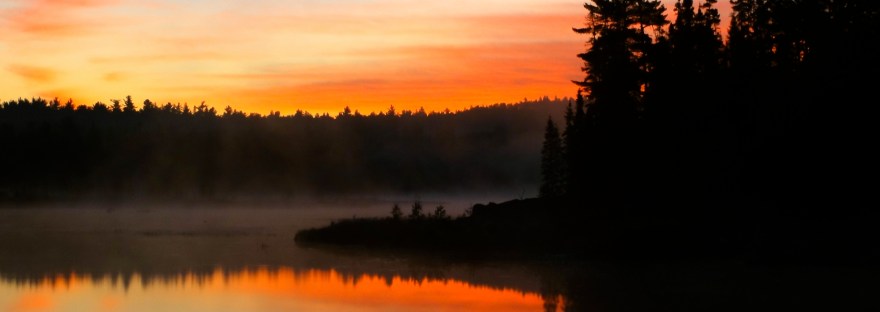
This photo was taken 41 years ago this month while backpacking in Rocky Mountain National Park (RMNP) with friends. We had just finished our freshman year at Colorado State University, and were ready to celebrate before scattering for the summer. It was warm and sunny the day we left, and we could see for miles, with hardly a cloud in the sky. How deeply good it feels to exchange a mental burden for a physical one, to walk off the inner sludge that final exams cause to accumulate, and to finally be able to greet spring with exuberance and open arms.

Taking to the mountains is a kind of spring-cleaning for the soul.

We hiked up to 11,000 feet to base camp among the fir and spruce at Lawn Lake in the Mummy Range. We were the only ones there. After making camp in mid-afternoon, we hiked around the lake, wished for fishing poles, had a leisurely dinner, and planned out our route to, weather-permitting, summit the Mummy, and, with luck, even Chapin, Chiquita, and Ypsilon mountains the next day depending on their snow cover. When you have grand plans in the mountains, you go to bed and get up early. We were bedded down before dark.

The RMNP website expressly warns about the vicissitudes of the wilderness: “Plan ahead and prepare: Plan your trip carefully. Prepare for extreme weather.” And for good reason. I can recall a July day backpacking in the park’s Never Summer range when a cloudless sky on a high plain at lunchtime became a menacing black, cold, and lightning-laced fury within the hour. We were caught high and unsheltered, forced to abandon our packs, spread out, and squat low on our haunches while the booming thunder shook the ground. I was 15, and my cheery camp counselor told the others to stay away from me, because with my mouthful of braces, the lightning would seek me out first. To this day I don’t know if she was serious or teasing. I remember finding the storm curiously invigorating-I was afraid and awed at the same time.

While sleeping the deep sleep of a college student freshly emancipated from classes and exams, the night got colder. Much colder as it turns out. We awoke around 4 a.m. when there was a muffled thump, and my tent-mate and I were immediately pinned inside our tent and sleeping bags. What in the world? I could just wriggle my arms free to push against the weight and find a flashlight. Imagine our surprise when, unzipping the tent fly, there was 3 feet of snow up the sides of the tent, the snow from the spruce having dumped with a tent-collapsing thud. Oh Oh. We were NOT prepared for snow, much less a blizzard of wet, heavy snow. Of course, back then, there were no cell phones or emergency GPS gizmos. The snow was already up to our knees, and it was steady. We could wait it out, or get out before it got deeper. We hoped, by going down, the snow would abate. So, by 4:30 a.m. we were packed and headed out by flashlight. It was a slog, sometimes the snow up to our hips. But, by noon, we were safely down, and headed into Estes Park for hot coffee and the best waffles the world has ever known.

The wilderness of life has its own storms. Illness. Job loss. Poor decisions coming back back to bite us. Weather disasters. Family strife. One night we lie down in peace and happy anticipation, only to be slammed awake, smothered by the fear, anxiety, and panic of an unexpected storm. The Bible has a consistently affirming message: “Do not be afraid.” “I will never leave you.” “God is the strength of His people, and a refuge in times of trouble.” I can’t promise that the outcome is always as good as hot coffee and waffles. Knowing God, it will be far, far better.

~J.A.P. Walton
 

adventure, Backpacking, Camping, canoeing, Creation, Creator, Faithful Living, God, Henry David Thoreau, Lessons from the Wilderness, Nature, Outdoor Adventures, Prayer, Uncategorized, wilderness, wisdom

A Song of Praise

Why do people yearn to go to the wilderness? Is it as simple as wanting to get away for a break? Is it an escape? For some, these adventures take the form of a quest to seek out beauty and peace and quiet, to discover new worlds. For others, getting away- in a canoe, or a tent, backpacking or biking- is a form of worship. Thoreau once saw a man fishing, and described it as “a sort of solemn sacrament and withdrawal from the world.”[1] Even Jesus was known to draw away for time alone. But he was not really alone, because we are also told that he drew away to pray to his Father.

We should think about the reasons we draw away from our busy world. I have heard people laughingly say that they don’t go to church on Sunday morning because they prefer to enjoy God’s world out on the golf course. Nature is beautiful, and no doubt golf is fun. Time spent in nature is restorative. Instructive. But to worship the creation instead of the Creator, to create our own god out of nature, is a mistake because nature is not God.

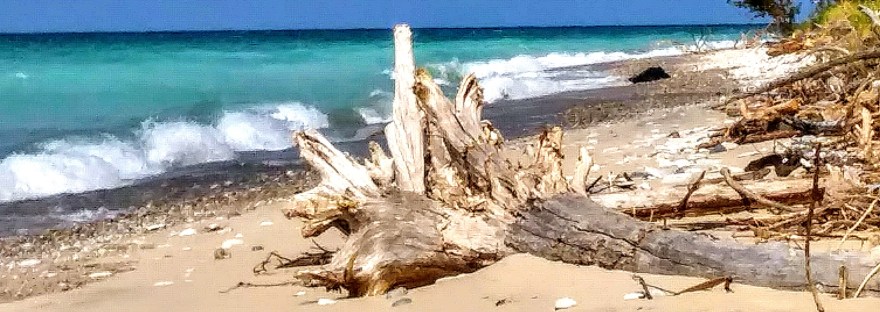
Nature teems with life. We rise from our tent, look out across a fog-shrouded wilderness lake, hear the birds, and breathe deep sighs of contentment. We feel so alive! But where does all this life come from? Your life does not rise out of the deep waters, the sighing pines, the quick-footed hare or the soaring hawk. God made all this beauty. Heart-wrenching, breath-stopping, glorious beauty. Why? To point our hearts to Him. It turns out that all of creation is a road map to God, and the delight He took in making everything is the same delight we are to take in Him.

Job knew it was all too wonderful to understand. But he did appreciate that “earth will never be your savior…that God alone is able to give you life.”[2]

There’s more to living this life than we can see, just like there’s more to a river than what we see on its surface. We don’t go out in nature to worship what we see but what we can’t.”

The next time you pick up a paddle or a pack, and find yourself surrounded by the glories of the wilderness, take a moment to let the awe sink in that a Creator would make all this life, including your life, and that He takes great delight in you. A song of praise can’t help but well up out of your heart.

~J.A.P. Walton

I appreciate it when you SHARE a blog post!

[1] Henry David Thoreau. A Week on the Concord and Merrimack Rivers, Viking Press, 1985. p. 22.

[2] Paul David Tripp. New Morning Mercies. Crossway. Wheaton IL. 2014. Devotion for March 24.

adventure, Campfires, Camping, Cancer, canoeing, Creation, Darkness, death, Faithful Living, God, Henry David Thoreau, Hope, Lessons from the Wilderness, Outdoor Adventures, Starry Skies, Uncategorized, wilderness, Wilderness Paddling, wisdom

The Brothers Gemini

The two Walton brothers have spent over thirty years paddling the rivers and lakes of the far north each autumn because of their shared love of wilderness, canoeing, and one another. They paddled as young men in the vibrant prime of their lives, and still do today as seasoned and much older men. Not even Hugh’s cancer could stop these adventuring brothers, who know more than most that both the wilderness and brotherly affection have healing hands. Hugh stayed positive throughout the ten long years of treatments, too busy living to entertain thoughts of dying. And in his deliberate living and adventuring, he taught his brother Mark about peace and hope.

It often happens that the sicker man is the nurse to the sounder.”[1]

A favorite time of day in the northern latitudes is the autumnal twilight when the sun has gone down early and it’s too cool for bugs. An earlier sunset means the brothers can sit around the campfire for a few hours before turning in. The washing up is done, the canoes are put to bed, and the bear bag has been secured high in a tree. Such evenings are steeped in the reflections of the lowering sun as it briefly teases the landscape and water into a blush, while the spruces’ silhouettes go from stark outline to murky drab until darkness cradles them into its bosom entirely. Eventually, the young fire that started up with spits and mutters matures into a sedate, radiating murmur of glowing and hypnotizing embers. The waters warble a sultry lullaby. A loon mournfully trills across the water. The night in the wilderness is never completely silent, rather orchestrated with a subtle harmony, and it becomes clear, with careful listening, that the small voice of God is out here in this deep indigo twilight. Slow evenings are a necessary part of the adventure, for it is at night that the body is restored. The same can be said for one’s soul.

It is easy, when far away from the nonstop noises and lights of our lifestyles, to look intently at every natural thing out in the wilds and feel thankful that the planet still has these unadulterated oases of space, timelessness, stillness, color, and open skies. This is flair. Art. It is creation, imagination, beauty and adornment. This is how God made the world, speaking it out word by word, adding extravagant flashes of color, texture, and music in the everyday life of the wilds. We miss seeing it and hearing it, and we misunderstand its importance in our daily lives. Fire, water, and the waking creatures of the night all make for a mesmerizing symphony, a bewitching tonic for what ails us.

The brothers aren’t big talkers at night; still they enjoy each other’s company in a curiously uncommunicative way, on a shared adventure among best friends at the end of a physically challenging day. And though the fire and melody draw them in, they stay up late-on clear nights at least-because of the stars. This is especially true when camped beside a remote lake, where trees and rocky ledges can’t obscure the sky. The starry lights emerge one by one as the darkness encroaches. And, aside from the fire, the darkness in the wilderness is complete, no rival light pollution out here. Venus, Jupiter, and the Big Dipper materialize. And though Orion won’t show up until November, they know he’s on his way, the able guardian of the night and comforting friend to those who pray through the night watches in winter. The dancers of the Pleiades begin their warm up. Somewhere out there in the low autumnal sky the sleepy moon pokes its head out from under the covers. Like Orion, felt but not yet visible in the northern hemisphere, the brothers Gemini stand tall, side by side, arms raised in triumph and praise. I like to imagine that the Walton fellows are the Gemini twins, arms around each other’s waists, holding their paddles aloft in victorious self-congratulation and a joy that cancer could not squelch.

~J.A.P. Walton

[1] Henry David Thoreau. A Week on the Concord and Merrimack Rivers, Viking Press, 1985. p. 31 (The author originally published this book in 1849, detailing an 1839 river trip with his beloved brother John, who died in 1842.) Read it here: A Week…Thoreau

adventure, Camping, canoeing, Faithful Living, God, Lessons from the Wilderness, Outdoor Adventures, Uncategorized, wilderness, Wilderness Paddling, wisdom

I Wish I May, I Wish I Might…

At the canoe shows, I like to watch people who stop to admire my husband’s and his brother Hugh’s Sea Wind canoes. These hardy vessels were both built by the famous Michigan paddling pioneer Verlen Kruger. The boats have handsome lines and a certain robust utility about them, and have rightly earned their reputation as having “cavernous storage and bombproof construction.”[1] They can even be joined with a cross arm for catamaran sailing on windy days. Some of the folks-usually men- are seasoned and avid paddlers, and the conversation wags excitedly back and forth around paddle characteristics, dry bags, portage-ability, steering, and stowage. But, by far, most of the people who stop by simply stare at the canoes with their bright yellow sail with what always transmits as a deep longing.

I resonate with that feeling of “I wish I may, I wish I might…” For one, the Sea Wind is a one-man canoe, so I cannot trip along with the men unless I get my own boat. For another, the boats weight 70 pounds, and the gear upwards of 200-300 pounds. I cannot physically carry that much on portage, and the first rule of wilderness adventure is that the group is as weak as its weakest member. More importantly though, the brothers’ yearly adventure trips are wilderness getaways that they’ve shared for 30 years or more, a time so sacred to their deep relationship that I really have no right to intrude. It’s okay, though. We all still paddle together plenty of other times each year.

No, the longing I observe is of the person who wants to be more than a casual weekend paddler who haunts the canoe shows. Who yearns to seek out true wilderness and pit him/herself against the fickle elements of nature, to share the nighttime stars with the moose and the bear. This person wants to do exactly what the brothers do, but can never get past the dreaming.

In all my years as a college professor and academic advisor, I had certain students with the same problem-they thought they wanted something quite badly, but simply could not summon the wherewithal to do what it took to make it happen. The biggest impediment was almost always their lack of confidence that they could, in fact, do this thing. As a result, they took few risks, settled too early, failed to do the hard work required, and missed out on a lot of life’s adventures. Of course, this same lack of confidence holds any of us back in myriad situations. We won’t risk the adventure of a job change, a move out of state, or going back to school to finally study the one thing we always loved. We long for a change we haven’t the grit to embrace and see through to its rewarding end.

I have to say that I think God himself is a risk taker.

He risked becoming a man in order to put the world back to rights. He certainly takes risks on us every day. The Bible is FULL of fragile people God bet on when they thought they couldn’t; just take a look at the weak-kneed lives of Moses, Jonah, and Peter. But, God equips us in every endeavor to which he calls us. And this is the secret: the strength is never our own, but God’s! What have you always wanted to do, felt called to do, but were afraid to try? Maybe it’s time to get in the boat, stop wishing and start paddling!

I wish I may, I wish I might, have the strength to start tonight.

~J.A.P. Walton

Join 485 other weekly readers by adding your email . You will be sent each new post directly!

Verlen Kruger

Quiet Water Symposium

[1] Phil Peterson. All Things are Possible: the Verlin Kruger Story: 100,000 miles by Paddle. Adventure Pulbications. Cambridge, MN. 2006. p.257.

Costa Rica, Creation, death, Dying to Self, Faithful Living, God, Lessons from the Wilderness, Prayer, Sacrifice, Serving Others, Uncategorized, wilderness, wisdom

Snatched

Do you have questions that can’t be answered?

Does it bother you that mercy is so difficult to understand?” *

I sat staring at the creek through the snowflakes yesterday, thinking about the nearness of Easter. Just then, Trout Creek’s resident red tail hawk dove to the wooded floor, wings awkwardly fanning the brown leaves, hopping and clawing, before launching to a sturdy branch for a fresh snack of field mouse. It only took a minute to rip and tear and gulp that mouse down. It reminded me of a day several years back when I was admiring a male cardinal at the feeder. Without a sound, a sharp shinned hawk dropped out of the Norway spruce, snatching that cardinal with swift surprise. The only evidence was a tiny cloud of red and pink wing fluff floating down onto the deck.

On our Costa Rica Outward Bound adventure, we were required to catch a chicken, kill it, and eat it. The catching was comical, but using a machete to behead it was gruesome, blood spurting in all directions while firmly holding the still nerve-wracked body in its violent and nauseating death shake. All so we could have some protein.  

Our sanitized grocery store wrappings of chicken and ground beef have made us naïve. Time out in the wilderness quickly teaches not of the gentleness of nature, but of its brutishness. Is life so cruel? Out in the wilds, we can’t whitewash the truth that all this teeming life around us will, and must be stilled. The heron will gulp the minnow. The salmon feeds the bear. The vole grows the fledging owlet. The cougar will bring down the freckled fawn, and the speckled trout will become our dinner. For one to live, another must die. That’s the immutable law of nature and nourishment, that one’s weakness becomes another’s lifeblood. And, that is the sum of it; life depends on death by design.

The same can be said for Good Friday and the Easter resurrection and what the mercy of God in Jesus did for each of us. Jesus died our own death and bore the just punishment we deserve, his flesh torn, his blood spilled out. If you think about it, it isn’t really about cruelty, but the mercy of sacrifice. For our own life to go on, we must kill and eat. (before you vegetarians get too high-minded, even the plants must die to feed us).

So I think it is good to ponder, “what or who would I die for?” at this time of year. Perhaps we’d die for our loved ones, or a brother or sister in the faith. Some might answer country, or liberty. I know people who give up things for Lent, like chocolate or screen time.  But that misses the entire point. Christ calls us to die to self first, to willingly give up our rights and our comforts by gladly and sacrificially taking up the hard work of our faith.

It is so clearly laid out for us in the Beatitudes. You are blessed when you recognize and mourn your selfishness and sin. And on up the ladder it climbs: life-giving blessing flows out of a meekness that denies self, hungers after God and a rightly pure heart, and shows mercy to others. Friends, isn’t it time to let Christ snatch you out of this world?

~J.A.P. Walton

Please share with your friends!

* Mary Oliver. Devotions. Penguin Press, NY. 2017. p. 239.