adventure, Affirmation, Aging and growing in character, beauty, Being lifted up, Being resilient, Blessings, Creation, Creator, Cycling, death, Developing good character, Dying to Self, Faithful Living, Family ties, Forest, God, Hardiness, Having hope about the future, Heartwarming, hiking, Hope, I lift my eyes up to the mountains, joy, Lessons from the Wilderness, Living Faithfully, Losing yourself in nature, Marriage, Nature, Outdoor Adventures, Outervention, Peace, Perseverence, Praise, Prayer, Risk Taking, River, Rocky Mountain National Park, Seasons, Serving Others, Sharing nature experiences, Storms, Uncategorized, virtue, What nature can teach us, When God is Silent, When God speaks

Being LIFTED

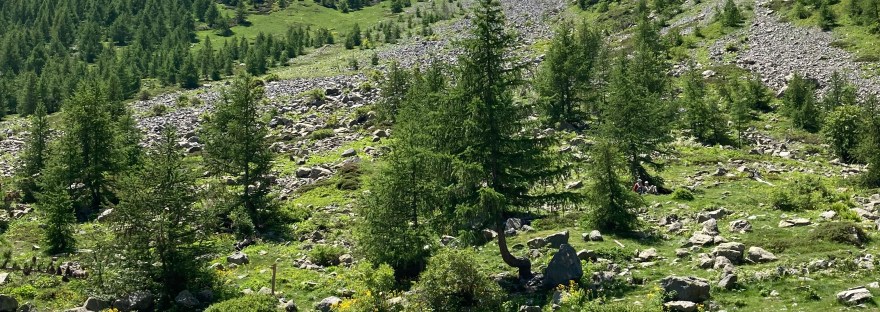
We find ourselves in the French Alps this month for our daughter’s much-anticipated wedding. The views from our rented condo are spectacular in this little ski resort town that reminds me of my childhood days spent at Rocky Mountain National Park. Rugged, snow-capped peaks at every turn, the serenade of the swift mountain streams, the hikers, the bikers, the dog-walkers and kayakers. All of it a delightful community focused on the outdoors of God’s grand and hospitable design.

These Alps have known their battles. Forged by tectonic plate uplift of immeasurable force, it is an area of high mountain tarns, and long valley cow-pastures. Here, during WWII, the Germans and Italians raced into France to lay hold of the lush farms and productive mines. 

When I was here two years ago, our daughter took unwell following a series of seemingly unrelated health challenges. Thank God for the persistence of the French doctors who found previously unknown factors that, perhaps compounded by a Covid vaccine, suddenly and decisively and dramaticallycoalesced into a life-threatening situation. Our daughter was laid low overnight. But now, she is again strong, and fit, and glowing like a bride-to-be should. We are so very thankful.

What better place than these mountains to be knocked low, and then given the grace of time and medicine to heal, stealing oneself against the tectonic forces in life that unexpectedly smack one down, but then turn to LIFT back up? I am reminded, here, of Psalm 121: “I lift my eyes up to the mountains. Where does my help come from? My help comes from the LORD who made heaven and earth…The LORD who will keep you from all evil; he will keep your life. The LORD will keep your going out and your coming in from this time forth and forevermore… He will not let your foot be moved, and he who keeps you will not slumber.” (Order mine).

I have been giving much thought of late to the grace inherent inthe word LIFT. Such a hopeful word, is it not?

We lift another’s spirits. We lift them in prayer. We lift the downhearted and weary when we step in to help. A smile. A hand. A kind word. Such a LIFT to others.

We are here to celebrate so many good things. May you too, in times of deep challenge and worry and stress and fear be able to look up, and know that help is there. That you WILL BE LIFTED when you most desperately need it. That a celebration awaits.

Thanks for reading along. Please click on the FOLLOW button the receive regular posts in the email.

J.A.P. Walton, Ph.D.

Jpraywalton.writing@gmail.com

beauty, Being resilient, Blessings, Creation, Creator, Faithful Living, Forest, God, Hardiness, Having hope about the future, Lessons from the Wilderness, Life's Storms, Living Faithfully, Nature, Outervention, Perseverence, Praise, rabbits, Religion, Storms, The forest and the dune, The sounds of nature, The squirrel and the rabbit, The still small voice of God, Things that are true, Threats from above, virtue, What nature can teach us, When God speaks, wilderness, wisdom

When the Rabbit Runs

I have been working on a list of things I know to be true no matter what my feelings might otherwise dictate. It is an interesting list I think, and one that will continue to grow. For example, the first item on the list is that all storms pass, and rough waters eventually become calm. I know in my heart that is true even though being in the middle of one of life’s storms often feels interminable and frightening.  Another is that a pleasant demeanor is always worth more than you feel it costs you.  And yet another: most unkindness is rooted in and motivated by fear.

But the one that captures my imagination today is the truth that you should look up when the rabbit runs.

Here at the bluff, the rabbits inhabit the margins between dune grass and forest edge. They are a sniffly little band, out in the dark devouring my carefully cultivated vegetation when there’s an entire forest of food at their disposal. But the forest hides the bobcat, and the bobcat has babies to feed. 

Out in the openness of the dune, the rabbit is most vulnerable to overhead threats. The red-tailed and red-shouldered hawks silently prowl the perimeter, then brashly dive right over the open space. Any living thing small enough to claw and suffocate-chipmunk, mouse, squirrel, bird, rabbit- is in their sights. Just the other day, a rabbit was hunkered under the bird feeder nosing around for spare seed when one of the resident bald eagles soared past. Though the eagle was not hunting, the sight and shadow of the large wings sent the rabbit panicking into cover of spruce.

Look up when the rabbit runs.”

The same holds true in our own lives, when surrounding threats make the heart skip a beat, when the instinct to run and hide overrules any other thought. Yet most of our threats don’t require flight, but head-on confrontation; they need a deep, thoughtful look, because they are rarely overt, but rather insidious, unobserved, often ignored. What do I mean? I mean we should think about the things that soar unnoticed overhead, things that threaten our well-being, things like too much time spent on frivolities like scrolling numbly through social media. Or too much raunchy music or humor or television that infiltrates our spirit with ideas that are not noble, or worthy of our brain power. Or the surprising anger that blackly rises up out of our hearts when another driver annoys us. Or the vitriol we spew when someone with an opposing viewpoint speaks out.

These are threats to our life precisely because we never recognize them until they have their claws around us, squeezing and suffocating the life right out of us. They cause us to sow discord, to angrily participate in cynical or enraged dispute rather than welcoming a civil discussion.  We mock others instead of honoring the very humanity we cherish in ourselves. Why can’t we instead concentrate on things that are noble and of good repute? What is so hard about keeping the ugly and sinister at bay while embracing whatever is lovely, and upright, admirable, and praiseworthy? I wish I knew. 

What I do know for certain is that God’s creation in nature is balm to the suffocating soul. This is where wisdom teaches patient and quiet observation, and where we will learn and observe all kinds of things that are worthy of praise. The opossum may not be comely, may even remind us of a rat, but it voraciously eats the ticks that make us and our pets sick. That scary little spider dines on roaches and mosquitos-the best pest control money can’t buy. The blue jay may mock and scold, but it also blares out a danger warning like a tornado siren. 

 Yes, the truth is that wisdom and insight are treasures worth seeking, and that the ant and bee are good mentors.”

Stop listening to the culture’s banalities. God’s nature is almost always more beautiful than human nature. Maybe a walk in the rain is a good idea. Maybe getting down to observe what’s going on in the grass will yield a bit of wisdom. Maybe setting aside your phone for a few hours is a worthwhile rebellion. Maybe you can learn the ways of the rabbit, to look up when it runs. You might just glimpse a magnificent eagle.

Thanks for reading along. Photo credit: Pixaby 051123

J.A.P. Walton, Ph.D.

jpraywalton.writing@gmail.com

adventure, Aging, Aging and growing in character, beauty, Creation, Developing good character, Dying to Self, Faithful Living, God, Hardiness, John Muir, joy, Lessons from the Wilderness, Living Faithfully, National Parks, Nature, New Year, Perseverence, Pilgrimage, Prayer, Retirement and bucket lists, sailing, Sierra Nevada, Silence, sunsets, Swallows and Amazons books, The rivers of Wales, US National Parks, virtue, visit the Roman Coliseum, what is mutual affection?, What is on your bucket list?, wisdom

The Kind of Bucket Worth Filling: A Divine Recalibration

In my youth I had a long list of the things I wanted to “do” someday: build a log home in Alaska, climb China’s Great Wall, explore the Roman Coliseum, watch Wimbledon from center court eating strawberries and cream, and complete a host of nature-conquering escapades. I most especially wanted to snorkel the Great Barrier Reef, hike in New Zealand and Scotland and the Pacific Northwest, kayak the wild rivers of Wales, visit every US National Park, trace the ghost of John Muir in the Sierras and recreate the sailing adventures of the Swallows and Amazons in northern England. https://en.m.wikipedia.org/wiki/Swallows_and_Amazons

Today we would call this a bucket list-making plans to “do” things before we die (as in kicking the bucket). Creating such dreams takes little energy, and I think we each have a natural longing to “do” and “see” as much as possible in our short lives, particularly now that global travel is so easily accomplished.

There’s an inbred alter ego that lifts us out of everyday humdrum life with fir-scented visions of creation’s beautiful, seductive allure.

Some people so over-romanticize their bucket list that the end (checking it off the list) is more fulfilling than the process (actually doing the activity). I have seen people race up to the sign outside a national park, snap a picture next to it, then turn around and drive away without even entering the park. Taking pride in having the deepest bucket but the shallowest mind is an ugly thing.

Lately, I have been doing a great deal of thinking about the folly of the bucket list.

True, in retirement we have visited several national parks and seen things we’d always hoped to see. But life has also narrowed for us, as naturally happens with aging. The parameters of the list have been newly dictated by life’s interruptions: our only child moved to France, our aging parents sorely needed us, the family home required maintenance and stewardship, and visits to the doctor became more frequent.

I do not resent the smaller bucket.

Moreover, I am thinking of remaking the bucket list altogether. It is a divine recalibration of sorts. I am no less adventurous (though Covid did do a gut-check on me), but my goals seem to be changing. Now it is less about the glory of doing and seeing, and more about the humble delight of being. Sunrises are stunning. Noontime is energizing. But the

sunset of life calls me to a quieter, more contemplative mindset, with a silent nod to the deep need to be present and prayerful.

In the Bible Peter encourages us to make every effort to add a 7-fold list of character qualities to our living, each built upon its predecessor like a great crescendo (2Pet1:5-8). He tells us that to possess these qualities in increasing measure will keep us from being unproductive in a life of faith. Goodness-right living and thinking; add to that knowledge-stay informed, and develop a deeper knowledge of who God is; add to that self-control-expunge petty selfishness and self-glorification; add to that perseverance-the patience of waiting on God’s timing for everything; add to that godliness-wise and moral thinking, speaking and devotion; add to that mutual affection-truly loving without judgment and fostering a kind and benevolent outlook; add to that love-the deep delight of living out the two greatest commandments to love the Lord God and to love your neighbor. I wrote earlier about the later years being an ascent toward heaven. https://jpraywalton.com/2022/10/25/the-advent-of-aging/

Practice this music of Peter’s teaching, and your life will awaken to the very kind of bucket that is worth filling.

Thank you for reading,

J.A.P. Walton, Ph.D.

jpraywalton.writing@gmail.com

Autumn, beauty, Birds, Creation, Faithful Living, God, Hardiness, joy, Lessons from the Wilderness, Nature, Perseverence, Seasons, virtue, Winter, wisdom, worry

The Junco

When the sun is at a certain angle, birds see a reflection of the vast expanse of trees and lake in the west windows here at the bluff. A junco flew into a window just last week, falling onto his side, eyes shut tight, tiny talons stiff and thrust laterally.

It is rarely good news when our feet go out from under us.

As the junco lay stunned and panting, I wondered at his presence. Why is he here so early? It is sunny and delightfully warm for early October. 

Around here, on the edge of dune and dense forest of maple, beech, and hemlock, the junco is a harbinger of winter. A flock will stick around all winter scrabbling the earth for seeds. Dressed in drab, dark coats with a buff white undershirt, they forage and flit in the cold, short days. They are as colorless as many of the cheerless gray days of the far north in winter, and as hardy as the cedar and dune grass and snow-bound trillium patiently waiting for spring’s warm kiss.

Still, they hold a fascination. I like that they flock together and am reminded of the reason God calls his church to be serious about fellowship. In that community we are afforded a measure of safety, companionship, and encouragement. The society we keep is a salve to some of the drag of winter’s bleakness. 

The juncos’ cheerless plumage makes me appreciate their contentment at keeping a low profile, nothing flashy, no brash “look at me” behaviors. They are happy to wear what God designed and shun being the center of attention. I marvel at my own lack of such inherent humility and contentment with what God provides.

Do not worry about your life, what you will eat or drink; or about your body, what you will wear. Is not life more than food, and the body more than clothes? Look at the birds of the air; they do not sow or reap or store away in barns, yet your heavenly Father feeds them. Are you not much more valuable than they?” Matt 6:25-27.

Basically, the junco is a bottom feeder, a forager snuffling through grasses and low foliage for insects and seeds.

I inherently like anything or anyone who is willing to work at the bottom rung of the ladder in humility, without compunction to produce or hoard. For me, the junco is a perfect example of the difference between the innate drive to work and thrive, and the big lies we swallow when we become driven, competitive, and overly ambitious. I am reminded that I must not think more of myself than I ought.

I most especially enjoy the juncos’ indifference to the cold and snow. Like their chickadee cousins, they seem to embrace the loveliness of that stark splendor only winter can serve up. I always resonate with any creature that welcomes winter’s caress and finds beauty in the sharp coldness of vapory breath and tingling cheeks.

Within minutes my tough, determined little junco had rolled onto his feet and opened his eyes, his milky breast pillowed and fluffed on the deck. It wasn’t long before he flew off to nurse his headache under the umbrella of the low-lying bluestem at the edge of the dune.  An omen of winter?  Perhaps. But I prefer to believe that the juncos are here as a God-given reminder to be humble and content and quietly diligent in all circumstances and seasons.

Thanks for reading,

J.A.P. Walton, Ph.D. 

email: jpraywalton.writing@gmail.com Instagram: jpraywalton_writing Facebook: Julie Pray Walton Image by JackBulmer from pixabay.com

Affirmation, Blessings, Creation, Creator, Cycling, Faithful Living, God, Hardiness, Hope, Life's Storms, Mountains, Perseverence, Pilgrimage, Risk Taking, Uncategorized, virtue, wilderness, wisdom

Test Your Mettle

Lately, I have been thinking about the notion of testing one’s mettle.  It’s an old-fashioned way of explaining resiliency, the capacity to soldier on through tough times, and drawn-out challenges. I think the key concept is that we grow in character by stepping out of our comfort zones, and enduring hard experiences. This happens to us as an individual, and to “we” as a community.

We test our own individual mettle to see if we have the courage, tenacity, and inner strength to climb the mountains in our way.

This is jarring, because our world is oriented towards personal comfort, faux strength, and instant gratification. And, because testing oneself is so disorienting, we rarely welcome a chance to see what we’re made of.

First, we don’t want to appear as if we’ve stumbled, splayed out publicly in our weakness, hurt, disbelief, and despair. We often fail to test ourselves because we are too busy acting as if we don’t need to.  Second, such testing is uncomfortable. 

We lay ourselves bare for the blacksmith’s hammering, a tempering that flattens and smashes our beliefs and suppositions on its way to forging strength and stamina.

Third, we are afraid of failing the test, of running the gauntlet only to find ourselves worse off than when we started.  When has your life been at a place of testing?  What was your response?

As a timid kid with little self-confidence, my first tests were all physically-difficult enterprises that pushed my fragile mental and emotional stability to-and beyond- their limits.  Climbing a 13,000 foot mountain while hampered by asthma and anemia was beyond difficult, always served up with a mental side dish of “I can’t do this.” But I did.

Taking a graduate biochemistry course without having the undergraduate requisite of general and organic chem was insanely challenging, my mind constantly gnawed with “I can’t do this.”  But I did.

Biking long distances, when the legs were dead, the seat numb, the fatigue’s lie of “I simply can’t go another mile” an unwelcome inner whine. But I could, and I did.

When we could not have more children, the emotional ache was unbearable. When confronted with “you can’t have kids” I finished my doctorate and taught for 20 years. I had thousands of wonderful kids over time.

Fortitude is an odd virtue. It digs deep, finds strength we didn’t know we had, keeps us moving forward, upward, and outward.  It is gas on the fire when our tank is empty. It is a second wind.  Each time we overcome some unpleasant or challenging circumstance, we carve another notch of confidence in our belt. But, I say fortitude is odd because for people who know and trust God, the real story is not in our own strength and endurance and ability, but in our weakness, our exhaustion, and our inability. All of creation glorifies the Creator.  When we manage to do something we thought impossible, and credit ourselves with fortitude, we take credit for something God did in and through us, trying on God’s glory for size.

We are fallen and always falling. The strength to stand is not our own. Nor is the strength to endure. Those who trust in God know this secret: we don’t have to survive these things alone in our own strength.

God will test your mettle. He will allow some uncomfortable, disorienting, heart-rending chapters to be written in your life. How you respond is up to you. Just know, you don’t have to go it alone.

~J.A.P. Walton