adventure, Affirmation, Aging and growing in character, beauty, Being lifted up, Being resilient, Blessings, Creation, Creator, Cycling, death, Developing good character, Dying to Self, Faithful Living, Family ties, Forest, God, Hardiness, Having hope about the future, Heartwarming, hiking, Hope, I lift my eyes up to the mountains, joy, Lessons from the Wilderness, Living Faithfully, Losing yourself in nature, Marriage, Nature, Outdoor Adventures, Outervention, Peace, Perseverence, Praise, Prayer, Risk Taking, River, Rocky Mountain National Park, Seasons, Serving Others, Sharing nature experiences, Storms, Uncategorized, virtue, What nature can teach us, When God is Silent, When God speaks

Being LIFTED

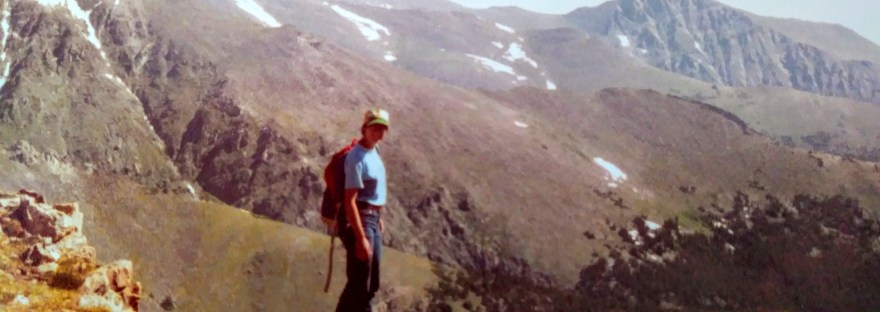
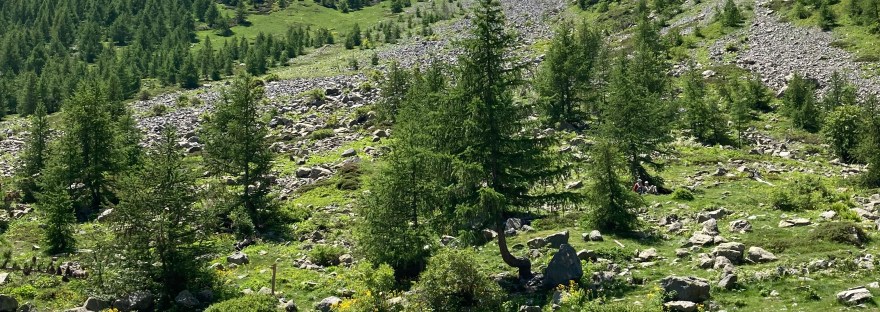
We find ourselves in the French Alps this month for our daughter’s much-anticipated wedding. The views from our rented condo are spectacular in this little ski resort town that reminds me of my childhood days spent at Rocky Mountain National Park. Rugged, snow-capped peaks at every turn, the serenade of the swift mountain streams, the hikers, the bikers, the dog-walkers and kayakers. All of it a delightful community focused on the outdoors of God’s grand and hospitable design.

These Alps have known their battles. Forged by tectonic plate uplift of immeasurable force, it is an area of high mountain tarns, and long valley cow-pastures. Here, during WWII, the Germans and Italians raced into France to lay hold of the lush farms and productive mines. 

When I was here two years ago, our daughter took unwell following a series of seemingly unrelated health challenges. Thank God for the persistence of the French doctors who found previously unknown factors that, perhaps compounded by a Covid vaccine, suddenly and decisively and dramaticallycoalesced into a life-threatening situation. Our daughter was laid low overnight. But now, she is again strong, and fit, and glowing like a bride-to-be should. We are so very thankful.

What better place than these mountains to be knocked low, and then given the grace of time and medicine to heal, stealing oneself against the tectonic forces in life that unexpectedly smack one down, but then turn to LIFT back up? I am reminded, here, of Psalm 121: “I lift my eyes up to the mountains. Where does my help come from? My help comes from the LORD who made heaven and earth…The LORD who will keep you from all evil; he will keep your life. The LORD will keep your going out and your coming in from this time forth and forevermore… He will not let your foot be moved, and he who keeps you will not slumber.” (Order mine).

I have been giving much thought of late to the grace inherent inthe word LIFT. Such a hopeful word, is it not?

We lift another’s spirits. We lift them in prayer. We lift the downhearted and weary when we step in to help. A smile. A hand. A kind word. Such a LIFT to others.

We are here to celebrate so many good things. May you too, in times of deep challenge and worry and stress and fear be able to look up, and know that help is there. That you WILL BE LIFTED when you most desperately need it. That a celebration awaits.

Thanks for reading along. Please click on the FOLLOW button the receive regular posts in the email.

J.A.P. Walton, Ph.D.

Jpraywalton.writing@gmail.com
adventure, Aging, beauty, Blessings, childhood, Costa Rica, Creator, death, Dying to Self, Faithful Living, Forest, God, Growing Up, Heaven, hiking, Home, Hope, joy, Lake Michigan, Lessons from the Wilderness, Mountains, Nature, Outdoor Adventures, Peace, Perseverence, Petoskey Stone, Pilgrimage, Prayer, Rainforest, Religion, River, Trails, Trees, Uncategorized, vigil, Wales, wilderness, wind, wisdom

At Home in the Here and Not Yet

It has dawned a clear, crisp early November day at the Bluff following two days of gales on Lake Michigan. As I sit at my desk writing, Mark is out with his chainsaw helping saw up the neighbor’s fallen ash tree. The whipping wind pushed it right out by its roots.

There’s something doleful yet timeless about a tree’s newly exposed roots- it is death, and homelessness, and loss, and capitulation and rebirth all rolled into one.”

I have been thinking about home lately-all the places I have called home, making a new home here at the Bluff after pulling up our lives at Trout Creek by the roots, and all the years my heart was searching for a home when what it really needed was God himself.

Being at home is a sense, a feeling of being nurtured yet challenged, content yet ever searching, with a pillow for your head and loved ones within reach. I have been at home in hiking boots on the slopes of the Rocky Mountains, the rain forests of Costa Rica, and the stony paths of the French Alps. I once had a home in Wales for a semester, rope-climbing the steep cliffs that face the Irish Sea, and paddling the wild Welsh rivers. I have made my home in a flat in Paris, writing for a whole blessed month while my daughter was at work. I was at home for many years in my calling as a college professor, enjoying the gift that thousands of students unknowingly gave me to fill the emptiness of infertility.

Nowadays, having endured the moving of the house back from the bluff’s edge and reconstructing the entire lower level, we are finally settled into home at the Bluff. Since I was five years old, I knew I would live here someday. That is because it has always been the place I come back to; on this side of the river, this has always been my one true home. This is where I set down roots and made lifelong friends, clothed in the balm of nature’s call and care. Here, I am embedded in forest and dune, blissfully at home on the long, lonely stretches of beach with a cherished petoskey stone in my sandy pocket. Here is the delight of slowing down, of welcoming the unplanned coffee and conversation with a new friend, and of taking the time to read, and reread some timeless favorites.

We are one short step from heaven here, figuratively, and literally.

 I know full well that this home is as temporary as all the others.”

Even as I wait on God in prayer and obedience, he too waits for me to finish my upward climb to my last and forever home with him. On that day, that most glorious day, my physical body tumbled like a dead ash tree by the gales of age, my soul will be loosed to heaven, my new and forever home. I can’t know from this side of the river what that will be like, but I suspect the surprise outweighs the not-knowing.

Keep climbing-your home awaits.

Thanks for reading,

J.A.P. Walton, Ph.D.

Contact me at jpraywalton.writing@gmail.com

Accomodation, Affirmation, Creation, death, Dying to Self, Faithful Living, Forest, hiking, Lessons from the Wilderness, Nature, Parasites, Pilgrimage, Religion, Sacrifice, Serving Others, Trees, Uncategorized, wisdom

The Plover and the Crocodile

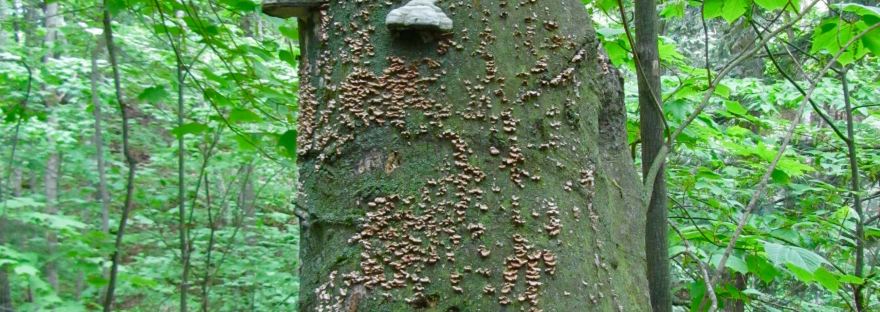
Last month, we hiked through a mixed forest of beech, oak, pine, and hemlock. It is evident all through the north that these hundred+ year-old forests are stressed; the ash still standing are all dead from the ash borer, the beech are ringed with deadly fungus, and the hemlock is next, expected to succumb to the wooly adelgid in Michigan as the tiny insects migrate from the east.

When we came across this tree (pictured), I began to think about the nature of parasitism, that form of symbiosis between species in which a squatter takes advantage of a host. The deer tick is a good example; it sucks the host’s blood, and transmits Lyme disease. Obviously, there is nothing good in the relationship for the host. The photo is of a hoof fungus on a decaying tree. It is a true parasite, attaching to a vulnerable place on the tree and causing stem rot, which eventually kills the tree.

Other symbiotic relationships can be mutually beneficial, in which both host and parasite benefit one another. In Egypt, the plover and the crocodile have made peace for millennia. The crocodile opens wide, the bird flits in and eats the rotting food stuck in the croc’s teeth, and, in apparent gratitude, the croc doesn’t eat the plover. Voila!  The bird eats and the reptile gets a free dental cleaning.

I think the most interesting of these relationships is that of commensalism, in which a parasite attaches to a host for a free ride. One benefits, while the other is not harmed; think barnacles on a whale. Or a person who has asked for prayer.

This has had me thinking mostly about human relationships.  I am people-shy by nature,

in a lifelong struggle to reconcile scriptural demands to love my neighbor with the fact that I prefer solitude. Instead of open arms that welcome “the inconveniences and suffering that love requires,” [1] I tend to flee into myself, wrapped, not in apathy, but in a dread-frosted cake of isolationism.

I do not want to be needed. I do not want my energy to be sucked dry like a tick sucks blood. I do not want to be used. And, to be sure, there are people who are parasitic on one’s time, emotions, money, and good intentions. Thus, most of my freely-given time goes to things like making the coffee, offering to pray for people, serving a meal, helping people move across town, even recover from a hurricane. I can do these things without much chance of exposing my inner self to the deep, sometimes twisted, often long-term (even endless) neediness (especially emotional neediness) of others. It is as much as I can do to avoid parasites while agreeing to a time-constrained spell of commensalism.

I guess, if I am honest, I dislike sacrifice.

And that’s too bad. Here, Nature is such a good teacher. I know that, like the plover and the crocodile, the Church is full of people who both need and love God.

I know that people will come alongside me to model what it means to love without dread, to give without constraint, and to be the hands and heart of God to someone who is hurting-even when that someone, someday, is me.

We always want our relationships to be mutual, in which both parties benefit. I see this naiveté all the time when young people head out on a mission trip; it’s less about sacrificial service than they like to think.

Truth is, the foundation of faith is sacrifice. And bloody.

Freely given that we might be greedy takers of forgiveness and salvation.

But, once freed from our wayward living, the expectation is that we follow. All the way to our own death if necessary. I believe this, but I have to continually pray that God helps me in my unbelief.

~J.A.P. Walton

[1]www.desiringgod.orgaccessed July 13, 2019. John Piper. Future Grace: The Purifying Power of the Promises of God.  pp. 283-284. 2012.

adventure, Creation, Creator, death, Faithful Living, God, hiking, Lessons from the Wilderness, Life's Storms, Mountains, Nature, Outdoor Adventures, River, Rocky Mountain National Park, Uncategorized, wilderness, wisdom

Trust Your Boots Girls!

In an icy parking lot earlier this week, the footing was dicey, and, at one point, I blurted out to no one in particular, “Trust your boots girl!”  This adage bubbled up from a deeply-etched memory of a time in high school when a group of gals was climbing Mount Meeker in the front range of Rocky Mountain National Park.  At 13,911 feet, it’s the closest I’ve ever come to peaking a fourteener.  At one point along that climb, there was a steep portion, prompting one member of our group to happily call out,

“Trust your boots girls!”

While at Colorado State University, I reveled in backcountry cross-country skiing. I took a 2-day lesson the first time, and the instructor emphasized the need to trust your skis so that you could flow with them as they glided.  Just before moving back to the Midwest for grad school, I purchased a set of used skis and boots from the ski rental store. The next snow, I waxed them up to go skiing. I could not ski! My left foot kept sliding sideways, and the ski itself seemed to awkwardly tilt my boot so I had no traction or control. My husband-to-be laughed at my claims of being an experienced skier. We soon discovered that the store in Fort Collins had sold me skis with two right-footed bindings. Trust your boots indeed.

When learning to kayak in Wales, we practiced rolling in an indoor pool. Despite heroic attempts, I never did master a tip and roll.  The instructor’s advice to trust your skill in the whitewater rapids didn’t sit well with me. I knew if I capsized, I’d be permanently upside-down knocking my head on submerged rocks.  Having once before been pinned under a turtled boat (see blog post Unbounded Joy, 7-31-18), a healthy respect for the water had evolved into an irrational fear of drowning.

It is just common sense to be fully prepared for a wilderness adventure-to have the right equipment and skill set to see you through to a happy conclusion.

When paddling or hiking, you have to trust your instincts, your experience, your companions, and your preparations. It is folly to be unprepared.

Still, you can never be prepared for everything. Accidents happen with no warning. Wind and weather are fickle. Forests catch fire, and rivers and canyons can swiftly flood. What can you trust when the world turns inside out, when trickles of doubt mushroom into cascades of fear for your safety, even for your life?

Proverbs teaches that trust is an outcome of wisdom, and that wisdom, in turn, is the principal heir of a healthy fear of God.

This is not the kind of fear that makes us dread God’s judgment, but, rather, the kind that sees beauty in creation and is wowed by the God who made it. Not fright but reverence. *

It seems to me we prepare for our trip through the wilderness of this world- on this side of the river- much better than we prepare to face a holy God, misplacing our sense of security by trusting in things, jobs, money, ‘safe’ cars, our own thinking. When my husband was in the ER a few years ago with multiple and deadly pulmonary emboli in both lungs, we did trust that the surgeon would do his best to keep death at bay. Still, our ability to remain calm and hopeful (it was surreal to be honest) came from a stronger, deeper, surer Source. From God himself, whom we love, fear, and deeply trust to make the path through the wilderness straight.

I hope you can spend a little down time this winter working out in what, or whom you place your trust. Life is fragile at best, and downright slippery at its worst.

~J.A.P. Walton

* for more on the wisdom of Proverbs, see God’s Wisdom for Navigating Life by Tim and Kathy Keller. 2017.

Blessings, Creation, Darkness, Forest, hiking, Lessons from the Wilderness, Light, Nature, Outdoor Adventures, Peace, Silence, Trees, Uncategorized, wilderness, Winter, wisdom

The Days Grow Short

The snow is drifting down at Trout Creek, but the squirrels and juncos pay it no heed. They stay busy burrowing and flitting, feeding.  Even so, it is quiet.  Too quiet. The pair of great horned owls we’ve had in the tall cedars for several years have not returned. Perhaps it’s too early, or they’ve wandered further north in search of denser forest. Their absence is palpable, even though we rarely saw them.

The color palette is hushed this time of year too. Brown is the primary hue, only brightened by the snow. Most signs of life are dampened too; no green leaves to dance in the breeze, no delectable tender shoots for the deer to eat. A six-pointed buck roamed by last week in a futile search for greens.  He was hard to spot in his winter camouflage of bristle brown.

We took a walk last week, up north on the Old Indian Trail, part of the Sleeping Bear Dunes National Lakeshore. Sleeping Bear info  It too was silent, the only sign of wildlife in the form of prints and scat. One lone, blustering blue jay pierced the calm, but even it preferred to remain hidden. No other sounds but the wind sighing up high in the firs, and our footsteps crunching on snow-crusted, ice-rimmed leaves.

Silence and beauty are soul sisters, each one weaving purpose and meaning into the other, that we can wrap ourselves in them.  It is one of the gifts of the wilderness to be able to experience both together.  The pulsing of the mute northern lights. Silently spreading ripples on still water. The shadow of an overhead harrier flitting across your path. The flick of the white patch of a deer’s tail.  The sun on its daily trip across the sky.  How nice that the tick of the clock, that slave driver of modern life, cannot contaminate the wilds.

The days grow short. May you find some silence in them, in the falling snow, the lighted tree, and the smile of a loved one. God once broke the winter’s silence with a baby’s cry and an angel’s song. It was cold and dark then too. May you embrace the quiet spells with wonder and delight.

~J.A.P. Walton

Thank you for reading along, and sharing with your friends.