Affirmation, Blessings, canoeing, Creation, Creator, Dying to Self, Faithful Living, Forest, God, Hope, Lake Michigan, Lessons from the Wilderness, Nature, Serving Others, Uncategorized, wisdom

Count On It

I am known in my family for my quirky penchant for counting things-the number of kayak strokes I take to my husband’s single dip of a canoe paddle (about 8), the mileage on a bike ride, the number of geese flying in V formation, how many feet of fishing line I let out when trolling, the number of steps in any flight of stairs, and a daily report of the number of cargo and cruise ships that pass by on the big lake.

During June at the bluff, the fervent counting begins. See the doe with two fawns, and raise your eyebrows in disbelief when the neighbor shows you a picture of the bobcat with five kits under her deck.  The robins are on their second brood already, and the dying ash trees that have summoned the voracious pileated woodpeckers means there are bugs galore just for the hammering. Today I saw a monarch butterfly, the first of the summer’s four generations that it will take to produce heirs with the will and stamina to fly to Mexico in September (one day two Septembers ago, I counted 75 monarchs/hour heading south along the bluff line). Each night, two baby screech owls silently glide in at dusk to hunt the plentiful moles and voles at the forest’s edge. And who could even begin to count the mayflies at hatch time?

I think I count things because it helps me be present and aware of my surroundings. Counting gives the world I see and hear a sense of order and rhythm, helping me apprehend patterns and hear Nature’s music.  Mostly I just love all things numbers.  Of course, much of the counting we do in life could be considered just so much idle wool-gathering; we tally our financial assets, count down the number of days until Christmas, check the number of likes on a social media post, and keep a running score in our head of who’s let us down.

But what should we be counting?  What (and who) can we count on? When Job tried to argue his feeble case, God let go with a thundering,

Who are you to lecture me? Where were you when I filled the storehouses with snow and hail? Do you even know how I measured out the dimensions of the universe? Can you count the lightning bolts?”

In other words, there are lots of things only God can count, like all the stars in all the universes, every fish in the sea, and the grains of sand on the coast. This is the same God who tenderly tells us that He knows the number of hairs on our head, and the very sum of the days of our life.

We can count on God to be our strength, hope, and peace when we feel like our own strength is gone. And, of course, when we live a life that has died to self, we can count on each other.

I love to watch the world go by while I keep count, and I am beginning to appreciate how to count it all joy when God gives me work to do, and the strength to do it. That’s what it really means to count your blessings.

~J.A.P. Walton

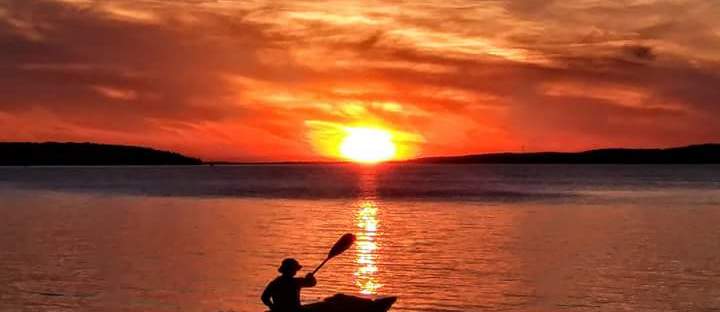
Photo Credit: ML Walton, Lake Charlevoix, June 2018.

Thanks for reading and sharing with your friends.

adventure, Camping, Close Quarters, Creation, Faithful Living, Forest, God, Lake Michigan, Lessons from the Wilderness, Life's Storms, Nature, Prayer, Rain, River, Uncategorized, wilderness

A Golden Prescription

I went camping last weekend at a state campground along the Lake Michigan shore with 21 other women and girls from church. Group camping presents me with an immediate conflict- I seek out the wilderness for its solitude and quiet, as a salve to an agitated personality, but the building of intimate community through group experience is a critical component of faith formation and practice. Let’s just say it pushes me out of balance to be in the woods with so many people and so much chatter.

To ensure some semblance of quiet time apart, I took a solo tent so I could bookend the day with thinking and prayer, zipping myself inside a tiny cocoon of solitude while the junior high girls laughed and squealed in a tent as big as a 2-bedroom apartment.  We were each having fun in our own way.

The second night, there was a long, slow, low rumble of thunder from far out on the big lake as I zipped up for the night. While rain in camp makes for muddy messes, and complicates the packing up of tent and fly, being snug and dry inside your tent as a thunderstorm rolls in, over, then onward is a singular thrill.  The flash of lightning, the bass thrum of thunder, and the percussive rain all around is like a cleansing bath for the soul. As I lay on my back, a gentle storm all about me, I was reminded of the way the spirit of God stills us even in the grip of life’s gales. The prophet Isaiah wrote that from the heavens above, clouds rain down righteousness; they shower it down to earth so that salvation can spring up, a salvation God creates and showers upon us. (Isa 45:8, paraphrased). In truth, all restoration and flourishing come from God.

But, our life is usually too rushed to feel like it is flourishing, restorative, and life-giving.

The present often seems more like a flooding river hurtling itself downward, always rushing in multiple directions, void of any sense of calm, hungrily sucking in those unaware and unprepared, flinging everything in its path down, and under as the waters close over, drowning all light and life. We are constantly trying to catch our breath, to hear God’s voice in this wilderness, and to spend a quiet moment alone with Him, that His Presence fills our present.

Who needs to worry about the future with a present like that?

If you are tired of your to-do list a mile long, I highly recommend a solo night under the trees in a rainstorm as a golden prescription.

~J.A.P. Walton

adventure, Affirmation, childhood, Creation, Creator, Darkness, Dying to Self, Faithful Living, God, Growing Up, Lessons from the Wilderness, Life's Storms, Outdoor Adventures, Peace, Religion, Risk Taking, Uncategorized, wilderness, wisdom

“It’s OK, I’ll Catch You”

Wilderness conjures up a sense of wildness, of things untamed. We typically think of wide swaths of forest, desert, or sea that have remained relatively untouched by people, and left in their natural state. Going into the wilderness is something we tend to do by choice, being well-prepared for survival of the physical challenges of weather, and the lack of shelter, clean water, and walk-in urgent care centers. It can be risky to enter into a wilderness adventure, but we control that risk with the right equipment, training, clothing and companions.

Still, taking such a calculated risk is beyond most people. There are certain characteristics associated with people who won’t take risks. They are not comfortable with any degree of discomfort, physical,emotional,or spiritual. They tend to only undertake activities that they can control. They are too easily afraid of the unknown…fearless would never describe their nature. And lastly, they are often too self-obsessed to intentionally step into that scary unknown.

Now, in the physical wilderness of outdoor adventure, common sense should dictate our behaviors. It would be foolish to paddle storm-tossed Lake Superior when you could hunker down safely in camp for the day, or to leave food and dirty dishes around camp in bear country.  But what can be said about our ability to navigate the emotional and spiritual side of the wilderness of life?

I was a timid child-so much so that my father often expressed mild disgust in wondering if something was seriously wrong with me. People frightened me.  So did the dark. And the Bambi movie, carnival rides, crowds, tornado warnings (my assigned spot was under a big desk in the basement), fireworks, nuclear attack drills, people shouting, and swimming in deep water. It was, frankly, a very big, and extremely scary world. In my middle years, I gained confidence by learning the ropes of sailing, paddling, climbing, backpacking, tennis, archery, and mathematics. As you might infer, I gravitated toward the solitary and quiet pursuits. These taught me a lot about myself- that I should focus on moving forward, not on failure, on problem solving, and developing a tougher skin more impervious to judgment. It slowly dawned that I could, and should-on purpose– be willing to try new things that made me uncomfortable, because being fearless is not the same as being reckless. As an adult, while my temerity can still arise at inopportune times, I am much better adapted to being open-minded to others’ opinions, and more willing to do the hard work of self-assessment- that uncomfortable dissection of one’s beliefs and attitudes and assumptions that need serious and studious attention.

I think the key words are LEARNING and WILLINGNESS. This is how we avoid always doing and saying what we have always done and said. It is how we cultivate a new, and godlier mindset.

As people in step with God already know, He seems fond of directing us to take big steps into very dark territory, into situations we cannot control, cannot predict, and for which we have few skills to offer. My guess is that God works this way to teach us dependence on Him. We have much to LEARN, and it is our WILLINGNESS to leap obediently into a new wilderness that, in the face of our common, culturally-dictated sense of things, makes no sense at all; to us it seems foolishly reckless. To God it makes all the sense in the world.  Fearlessness comes from complete trust, and a willingness to relinquish control and comfort and fear of failure to the One who makes all of life a wilderness. What has been holding you back? It’s time to drop your self-obsession and push through to a higher plain. The wilderness of life may be scary, but it is also indescribably beautiful. Make the leap. God will catch you.

Thanks for reading and sharing!

~J.A.P. Walton

adventure, Affirmation, Backpacking, Camping, Creation, God, Lessons from the Wilderness, Life's Storms, Mountains, Nature, Outdoor Adventures, Peace, Perseverence, Rocky Mountain National Park, Spring, Uncategorized, wilderness, wisdom

Up to Your Hips in Trouble

This photo was taken 41 years ago this month while backpacking in Rocky Mountain National Park (RMNP) with friends. We had just finished our freshman year at Colorado State University, and were ready to celebrate before scattering for the summer. It was warm and sunny the day we left, and we could see for miles, with hardly a cloud in the sky. How deeply good it feels to exchange a mental burden for a physical one, to walk off the inner sludge that final exams cause to accumulate, and to finally be able to greet spring with exuberance and open arms.

Taking to the mountains is a kind of spring-cleaning for the soul.

We hiked up to 11,000 feet to base camp among the fir and spruce at Lawn Lake in the Mummy Range. We were the only ones there. After making camp in mid-afternoon, we hiked around the lake, wished for fishing poles, had a leisurely dinner, and planned out our route to, weather-permitting, summit the Mummy, and, with luck, even Chapin, Chiquita, and Ypsilon mountains the next day depending on their snow cover. When you have grand plans in the mountains, you go to bed and get up early. We were bedded down before dark.

The RMNP website expressly warns about the vicissitudes of the wilderness: “Plan ahead and prepare: Plan your trip carefully. Prepare for extreme weather.” And for good reason. I can recall a July day backpacking in the park’s Never Summer range when a cloudless sky on a high plain at lunchtime became a menacing black, cold, and lightning-laced fury within the hour. We were caught high and unsheltered, forced to abandon our packs, spread out, and squat low on our haunches while the booming thunder shook the ground. I was 15, and my cheery camp counselor told the others to stay away from me, because with my mouthful of braces, the lightning would seek me out first. To this day I don’t know if she was serious or teasing. I remember finding the storm curiously invigorating-I was afraid and awed at the same time.

While sleeping the deep sleep of a college student freshly emancipated from classes and exams, the night got colder. Much colder as it turns out. We awoke around 4 a.m. when there was a muffled thump, and my tent-mate and I were immediately pinned inside our tent and sleeping bags. What in the world? I could just wriggle my arms free to push against the weight and find a flashlight. Imagine our surprise when, unzipping the tent fly, there was 3 feet of snow up the sides of the tent, the snow from the spruce having dumped with a tent-collapsing thud. Oh Oh. We were NOT prepared for snow, much less a blizzard of wet, heavy snow. Of course, back then, there were no cell phones or emergency GPS gizmos. The snow was already up to our knees, and it was steady. We could wait it out, or get out before it got deeper. We hoped, by going down, the snow would abate. So, by 4:30 a.m. we were packed and headed out by flashlight. It was a slog, sometimes the snow up to our hips. But, by noon, we were safely down, and headed into Estes Park for hot coffee and the best waffles the world has ever known.

The wilderness of life has its own storms. Illness. Job loss. Poor decisions coming back back to bite us. Weather disasters. Family strife. One night we lie down in peace and happy anticipation, only to be slammed awake, smothered by the fear, anxiety, and panic of an unexpected storm. The Bible has a consistently affirming message: “Do not be afraid.” “I will never leave you.” “God is the strength of His people, and a refuge in times of trouble.” I can’t promise that the outcome is always as good as hot coffee and waffles. Knowing God, it will be far, far better.

~J.A.P. Walton


adventure, Backpacking, Camping, canoeing, Creation, Creator, Faithful Living, God, Henry David Thoreau, Lessons from the Wilderness, Nature, Outdoor Adventures, Prayer, Uncategorized, wilderness, wisdom

A Song of Praise

Why do people yearn to go to the wilderness? Is it as simple as wanting to get away for a break? Is it an escape? For some, these adventures take the form of a quest to seek out beauty and peace and quiet, to discover new worlds. For others, getting away- in a canoe, or a tent, backpacking or biking- is a form of worship. Thoreau once saw a man fishing, and described it as “a sort of solemn sacrament and withdrawal from the world.”[1] Even Jesus was known to draw away for time alone. But he was not really alone, because we are also told that he drew away to pray to his Father.

We should think about the reasons we draw away from our busy world. I have heard people laughingly say that they don’t go to church on Sunday morning because they prefer to enjoy God’s world out on the golf course. Nature is beautiful, and no doubt golf is fun. Time spent in nature is restorative. Instructive. But to worship the creation instead of the Creator, to create our own god out of nature, is a mistake because nature is not God.

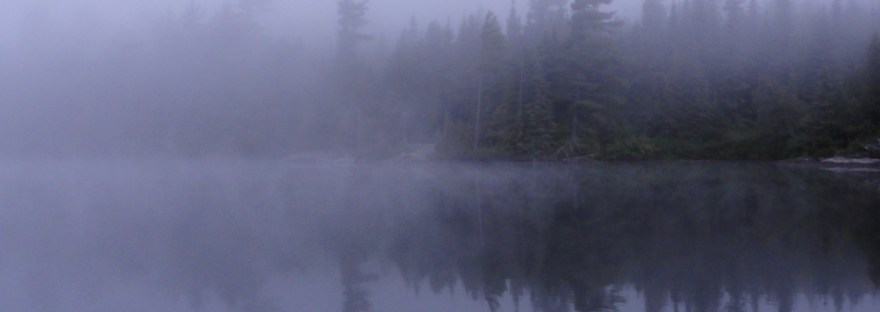
Nature teems with life. We rise from our tent, look out across a fog-shrouded wilderness lake, hear the birds, and breathe deep sighs of contentment. We feel so alive! But where does all this life come from? Your life does not rise out of the deep waters, the sighing pines, the quick-footed hare or the soaring hawk. God made all this beauty. Heart-wrenching, breath-stopping, glorious beauty. Why? To point our hearts to Him. It turns out that all of creation is a road map to God, and the delight He took in making everything is the same delight we are to take in Him.

Job knew it was all too wonderful to understand. But he did appreciate that “earth will never be your savior…that God alone is able to give you life.”[2]

There’s more to living this life than we can see, just like there’s more to a river than what we see on its surface. We don’t go out in nature to worship what we see but what we can’t.”

The next time you pick up a paddle or a pack, and find yourself surrounded by the glories of the wilderness, take a moment to let the awe sink in that a Creator would make all this life, including your life, and that He takes great delight in you. A song of praise can’t help but well up out of your heart.

~J.A.P. Walton

I appreciate it when you SHARE a blog post!

[1] Henry David Thoreau. A Week on the Concord and Merrimack Rivers, Viking Press, 1985. p. 22.

[2] Paul David Tripp. New Morning Mercies. Crossway. Wheaton IL. 2014. Devotion for March 24.