beauty, Being resilient, Blessings, Campfire's glow, Campfires, Creation, Darkness, Faithful Living, Having hope about the future, how nature heals, joy, Lessons from the Wilderness, Light, Losing yourself in nature, Outervention, Sitting around the campfire, sunrise, the vicissitudes of life, Watching the campfire, When the sunrise lights the clouds

The Light from Under

The sun rose above a cold and hushed forest this morning, making the high clouds blush with anticipation. To the east, the trees’ backdrop was all crimson and fire, while to the west the underbelly of the sky was lit in rosy pastels. A gull floated high above the bluff shaded as pink as a flamingo. The browsing doe’s brown winter coat was tinged a dusky magenta.

I have always enjoyed the effects of things being lit up from below. This is nowhere more observable than around a campfire on a very dark night. As people lean forward to warm their hands, their faces take on a softened shimmer, mesmerized by the flick and spark of the burning wood. We are used to turning our faces toward the sun to momentarily appreciate its balm and warmth, but a campfire’s burning coals smooth out wrinkles of anxiety, bathing the heart in calming thought like

a reflection within a reflection. 

Light from above leaves sharp shadows. Light from below melds with shadow to soften the outlines. Life is like that sometimes. An unanticipated threat looms suddenly, glaringly lit by a fearful realization: an unexpected bill we cannot pay, a pink slip at work, an unwelcome, gut-wrenching diagnosis. The light is coldly enlightening-there is trouble afoot, and the shadows are long and dark. 

Making a nighttime fire in the fireplace or the backyard fire pit brings a different perspective. The light softly cracks the darkness, the flames invite us to quell our panic, to murmur with the nattering coals into the warm light’s crevices – not to forget our troubles, but to see them in a light less stark. Illumined, yes. But without the anxious shadows, warming our souls in the fire’s rhythms of flare and ember. I’ve never seen a more beautiful face than one watching a campfire, meditatively strengthening with faith and resolve to face the shadows and overcome them.

________

Thanks for the time you take to read my wandering mind. After seeing today’s magnificent sunrise, I decided to try a writing exercise on why I adore the softening effects of under-lighting. It isn’t easy to describe!

J.A.P.Walton, Ph.D.

Feel free to comment here or send an email: jpraywalton.writing@gmail.com
beech bark disease, emerald ash borer, what is a forest canopy, what thrives in a forest understory, where dune and forest meet

The Wonderful Understory

We live atop a terminal moraine along the eastern shore of Lake Michigan where northern forests abruptly meet perched dunes left by retreating ice. The dunes themselves have particular personalities formed over eons by wind, water, and erosion. Some are filled with bowls of fine, gentle sand, others are, especially on the lee side of a foredune, more stable, with an increasingly diverse plant life that will transition slowly over centuries into forest. Because the dunes themselves are in constant flux, caving and calving in giant blowouts down into the lake and blowing in a never ending effort to build more dune, it appears as if the forests behind the dune scarps are in constant peril of falling into Lake Michigan. In reality, the dunes are just as likely to give way to forest over the centuries.

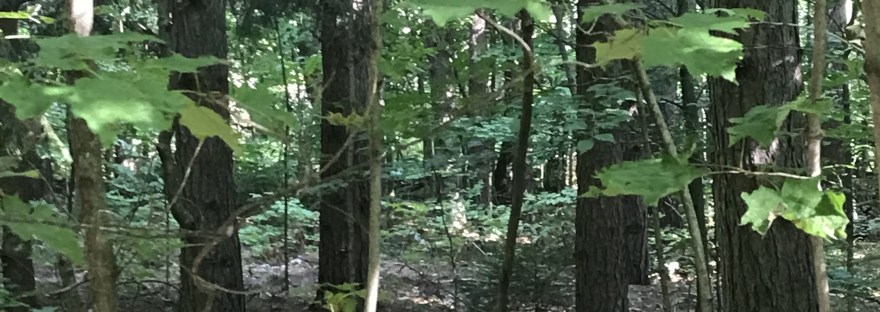
The forest here is itself transitional, a mix of mature hardwoods of beech, ash, sugar maple, birch, basswood and oak, trees that took shameless advantage of copious sunlight when the loggers of the 19th and early 20th centuries voraciously harvested every white pine in the area. The towns here are all old logging towns, built quickly to handle the loads of lumber needed to build (and rebuild) Chicago, and to fire smelting operations up and down the coast. 

What is interesting about the forest that sprang up behind the white pine decimation is its inclination toward increased diversity. This is especially evident in the understory, which is that sub-canopy of life that resides in the scarce light beneath the skirts of the overstory canopy created by the largest trees-here, the beech and ash particular. 

The understory is what is a fascinating study. A first look in summer reveals a tangled mess of saplings, seedlings, mosses, lichen, ferns, and bracken all competing mightily for even a taste of the sun, and just a smidge of the soil’s nutrients and rain hogged so mercilessly by the overstory. They don’t just survive, they thrive. It’s an important adaptation since the canopy itself is aging-out. A grand beech may live 150 years. Here they are already about 120, and severely tested by beech bark disease. Most will be gone within the decade. The stately ash ARE already gone, succumbed to the emerald ash borer like so many foot soldiers hopelessly advancing into waves of cannon fire and bullets. 

So, the oak and maple and basswood have had to accept the mantle of keepers of the canopy, along with scattered hemlock, cedar, and balsam fir. And, happily, the understory pulses with life: deer, trillium, wild leek and blackberry, porcupine, pileated woodpecker, screech owl, wolf spider, wild turkey, coyote, bobcat and cougar. I love the victorious understory, patiently waiting its turn, secure in the relative protection of the older, more mature trees, then stepping into the light when its turn arrives. 

It is the same, I think, for my own family. Our grandparents came to the area 90 years ago, when the ash and beech were young, the town languishing in a post-logging and post-war hangover. They began a legacy that we now carefully steward and nurture because they, like the forest, went from young to old, from healthy to ailing, and from upright to fallen. So it is our turn to take up the mantle until we too age-out and leave the canopy to younger lives. What is glorious to me is that life will go on here without us in all its beauty.

Thanks for reading,

J.A.P. Walton

jpraywalton.writing@gmail.com

Being lifted up, Being resilient, Cancer, Creation, Creator, death, drought, Faithful Living, feeding the birds, floods, God, Hardiness, Having hope about the future, Heaven, help in hard times, Hope, how nature heals, How to get a hand up, Lake Michigan, Lessons from the Wilderness, Life's Storms, mortality, mourning loss, Nature, Peace, Perseverence, Prayer, Seasons, Storms, sunrise, sunsets, the vicissitudes of life, Things that are true, Threats from above, tides, vigil, Water, weeds, What nature can teach us, When God is Silent, When God speaks, when it hurts too much to pray, when time stands still, why nature is predictable, wilderness, Winter, wisdom

The Tide Always Turns

We are in the second year of drought at the bluff, having come full circle from the high and destructive Lake Michigan waters of 2020 to lower levels which now grace us with an expansive beach. We happily embrace the protective nature of lower water, allowing the bluffs up and down this stretch of coast an opportunity to reach repose, a breath of time to quell the worries up top about losing homes into the lake.

Nature is like that, with its highs and lows, its unpredictability and fickleness.

And yet, much of nature IS predictable: seasons turning, tides that rise and fall on schedule, sunrise and sunset, baby robins in the spruce each June. The weeds will still poke their pesky way into the garden, the deer will eat the black eyed susans, and the toads will hang out underneath the bird bath.

Even so, nature is also filled with unwelcome surprises. No wonder we become watchful and wary, scanning for potential threats. The roller coaster of worry is real; one year you are flooded and caving in, and the next joyfully traipsing upon wide, sandy, pristine beaches.

Chaos tamed for a time by calm.

Likewise, the human experience runs an emotional gamut; carefree days can turn on a dime by a swift and surprising threat. A cancer diagnosis. A silent and devastating stroke. A deathly ill child. Life goes from calm back to chaos and we are caught frightfully unaware. 

At least we don’t get eaten in the real sense. In the rest of the animal world, there is constant peril from predators. Truth is, everything must kill to eat; the food chain is merciless in its hierarchy. Once, at our old home at Trout Creek, I was delighting in a male cardinal at the bird feeder in the middle of winter. His cheery, cherry mantle was lovely against the frosty snow. Without warning, a blur of steel blue swept down from above and grabbed the unsuspecting cardinal in a flurry of red fluff. A hungry sharp shinned hawk, an accipiter (a bird that eats other birds) was now somewhere nearby squeezing the life out of that wretchedly beautiful, shapely, lovely cardinal. All that was left were red feathers strewn across the snow. Delight into mourning in a flash.

Gain, loss. Hardy, sickly. Peace, fright. Life, death. We live into it, learning along the way that this is often how life works. We cruise along when things are good then, without warning, we find ourselves on our knees in sobs and suffocation and despair. We aren’t alone in this cycle. Fear and despair and mourning accompany the goose who loses its lifelong mate; the nesting wood duck forced to flee a marauding raccoon with an appetite for eggs; the trees bulldozed for yet another development; the doe who watches the bobcat steal her fawn. 

Is there any good to come of it? I believe there is.

Our own crises awaken a buried sense of mortality when our blithe notion of timelessness evolves to a new understanding and esteem for the value and brevity of life.

It often helps us turn back to God our Creator for help, comfort, and mercy. In the animal world, life goes on. New chicks are born. Survivors of the floods stand against next year’s droughts. The dust of death and the ash of mourning are followed by the songs and sun of a new day; mourning slips into morning.

And that is what IS predictable. We will fall and we will rise up. Life’s vicissitudes will flatten us with fear then extend hands of help and hope in the form of neighbor and Creator. If you are in a season of despair, take courage. The nature of nature is to help you back up to heal and stand against the next thing that would steal your peace. Be assured. The rains end the drought, and the tide always turns. 

Thanks for reading along.

J.A.P. Walton, Ph.D.

jpraywalton.writing@gmail.com

Image by Tom Ferguson from Pixabay

Click on the FOLLOW button to receive new posts by email.

adventure, Affirmation, Aging and growing in character, beauty, Being lifted up, Being resilient, Blessings, Creation, Creator, Cycling, death, Developing good character, Dying to Self, Faithful Living, Family ties, Forest, God, Hardiness, Having hope about the future, Heartwarming, hiking, Hope, I lift my eyes up to the mountains, joy, Lessons from the Wilderness, Living Faithfully, Losing yourself in nature, Marriage, Nature, Outdoor Adventures, Outervention, Peace, Perseverence, Praise, Prayer, Risk Taking, River, Rocky Mountain National Park, Seasons, Serving Others, Sharing nature experiences, Storms, Uncategorized, virtue, What nature can teach us, When God is Silent, When God speaks

Being LIFTED

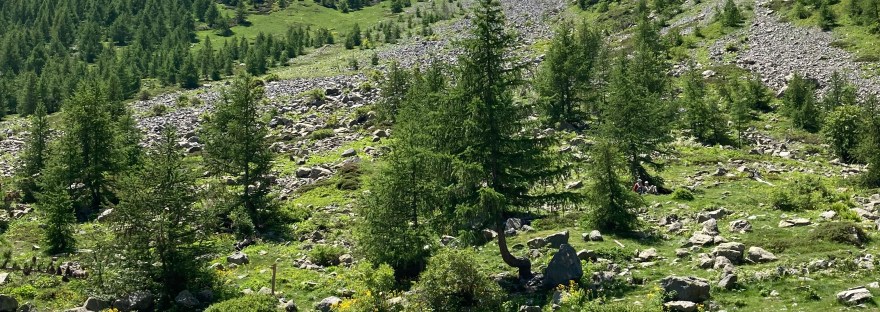
We find ourselves in the French Alps this month for our daughter’s much-anticipated wedding. The views from our rented condo are spectacular in this little ski resort town that reminds me of my childhood days spent at Rocky Mountain National Park. Rugged, snow-capped peaks at every turn, the serenade of the swift mountain streams, the hikers, the bikers, the dog-walkers and kayakers. All of it a delightful community focused on the outdoors of God’s grand and hospitable design.

These Alps have known their battles. Forged by tectonic plate uplift of immeasurable force, it is an area of high mountain tarns, and long valley cow-pastures. Here, during WWII, the Germans and Italians raced into France to lay hold of the lush farms and productive mines. 

When I was here two years ago, our daughter took unwell following a series of seemingly unrelated health challenges. Thank God for the persistence of the French doctors who found previously unknown factors that, perhaps compounded by a Covid vaccine, suddenly and decisively and dramaticallycoalesced into a life-threatening situation. Our daughter was laid low overnight. But now, she is again strong, and fit, and glowing like a bride-to-be should. We are so very thankful.

What better place than these mountains to be knocked low, and then given the grace of time and medicine to heal, stealing oneself against the tectonic forces in life that unexpectedly smack one down, but then turn to LIFT back up? I am reminded, here, of Psalm 121: “I lift my eyes up to the mountains. Where does my help come from? My help comes from the LORD who made heaven and earth…The LORD who will keep you from all evil; he will keep your life. The LORD will keep your going out and your coming in from this time forth and forevermore… He will not let your foot be moved, and he who keeps you will not slumber.” (Order mine).

I have been giving much thought of late to the grace inherent inthe word LIFT. Such a hopeful word, is it not?

We lift another’s spirits. We lift them in prayer. We lift the downhearted and weary when we step in to help. A smile. A hand. A kind word. Such a LIFT to others.

We are here to celebrate so many good things. May you too, in times of deep challenge and worry and stress and fear be able to look up, and know that help is there. That you WILL BE LIFTED when you most desperately need it. That a celebration awaits.

Thanks for reading along. Please click on the FOLLOW button the receive regular posts in the email.

J.A.P. Walton, Ph.D.

Jpraywalton.writing@gmail.com

Uncategorized

Worth Hooting About

I am an introvert by nature. My best friends are few, most are books, and I adore stealing a few hours to myself whenever possible. But deep down inside, I know that it is not good for me to be alone. It is so easy to fall down the rabbit hole that rejoices in aloneness, where you are beholden to no one. Where only your own needs be met. Where there is no tiresome shallow conversation to endure. Where the words are all yours.

That, my friends, is sometimes needed in order to hear the small voice God often uses. This is when immersing oneself in nature is a healthy option. But I think it is

decidedly unhealthy to intentionally flee others in order to pamper your own selfishness.”

And so it was that I found myself part of a raft of friends on a kayak trip down the Crystal River last week. It was filled with all the usual hullaballoo of getting six aging gals safely onto, and down the river. Laughter. Beauty. Encouragement. And enough still water to still the soul. 

If you were to ask me in an unguarded moment about river tripping with other women, I would automatically reply that it’s too loud, too much of a pain to try and keep together, and far less desirable than a quiet, moody, lovely, silent paddle alone.  (Yes, my filter is aging out, and my mouth runs ahead of my thinking in these moments).

But last week proved to me how wrong I am to assume that fun in nature must always be a solo experience. Last week, a rising storm to the east serenaded us with a rumbly bass of thunder, and a happy kingfisher jabbered and scolded us around each bend. The crystal clear water was a delight, showing the whirled swirly stone patterns made by the currents. The river was snagged with cedar downfall, those trees leaning over the water in last-gasp attempts to stay upright. They made me think of my own declining posture with age, as my hip flexors weaken, and my torso is pitched forward as if my head is too heavy, making my eyes look down when what I want is to look up and around.

Yes, there were noisy moments. But the silent interludes were magical.

We could be together and present and paddling in harmony, spread out down the river like so many Pooh sticks tossed off the bridge.”

I could back into a side calm and listen. Gaze. Inhale. Relax. And I find that the sistership of these companions was a gift to my gnarly, lonely soul.

At the takeout bridge, there was a three-headed culvert that pitched the rising current to the other side. I thought I should takeout before then, just to be safe. But then a friend disappeared into the culvert and just like that she was gone with hoots and shrieks. I could hear her laughing on the other side. And before I knew it, I was lining up to run the culvert, scooching down to make sure my head cleared the ceiling, and the current rushed me in, and through, popping the boat out the other side in a flash of boat-borne joy I had not experienced in a very long time. 

And that’s the thing of it; experiences in Creation are best when shared.”

Part of the joy of it all is being able to turn to someone and find validation that this is beautiful. Sacred. Healing. Worth hooting about.

Thanks for reading! We are off to France for a long-awaited wedding. If there is internet, I may be able to post from the French Alps. Special thanks to all the folks back here lined up to house sit! And to my paddling gals.

Julie A.P. Walton, Ph.D.

jpraywalton.writing@gmail.com